In complex industrial piping, standard valves often fail when faced with high-solid slurries, aggressive chemicals, or extreme pressure fluctuations. Specialized valves utilize targeted designs and advanced materials to ensure system reliability where conventional hardware falls short.
1. Pinch Valves: The Master of Slurries and Abrasion

Known as the “flexible sleeve” valve, the Pinch Valve is the ultimate solution for media that would normally clog or corrode metallic internal parts.
Working Principle: A flexible rubber sleeve is squeezed shut by a mechanical or pneumatic actuator.
Key Advantage: The medium only contacts the rubber sleeve, completely isolating the valve body and mechanical parts from corrosion and abrasion. Its “self-cleaning” nature means any scale buildup on the sleeve is cracked off during the opening/closing cycle.
Applications: Mining tailings, sewage sludge, and cement conveying.
2. Duckbill Valves: Maintenance-Free Backflow Prevention

The Duckbill Valve is a 100% elastomer check valve shaped like a duck’s beak. It functions without a single moving mechanical part (no hinges, discs, or springs).
Working Principle: Forward pressure opens the flexible “lips,” while backpressure collapses them shut.
Key Advantage: It cannot “seize” or “rust.” It can seal around solids (like sticks or stones) that would jam a traditional swing check valve.
Applications: Stormwater outfalls, sewage discharge, and tide prevention.
3. Rotary Airlock Valves: The Powder Handling Gatekeeper

In powder and bulk solid systems, the Rotary Airlock (Discharge) Valve serves three roles: discharging material, metering flow, and maintaining an air seal.
Working Principle: A multi-blade rotor rotates within a housing, moving pockets of material from a hopper to a conveying line.
Key Advantage: It prevents air leakage between pressure-differing zones (locking the air) while providing a precise volumetric feed.
Applications: Cement silos, flour milling, and chemical powder dosing.
4. Knife Gate Valves: Cutting Through Solids

Unlike standard gate valves, the Knife Gate Valve features a sharpened stainless steel gate designed to slice through thick slurries and fibrous materials.
Working Principle: The blade-like gate descends vertically, cutting through the media to seat against a resilient or metal seal.
Key Advantage: The slim profile and “knife” edge prevent solids from accumulating in the seating area.
Applications: Pulp and paper, mineral processing, and wastewater treatment.
5. Vacuum Breaker Valves: Protecting Against Pipeline Collapse
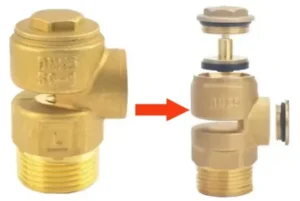
Negative pressure (vacuum) can be as destructive as overpressure, causing large-diameter pipes to “implode” or collapse.
Working Principle: When internal pressure drops below atmospheric pressure, the valve automatically opens to let air in, breaking the vacuum.
Key Advantage: Rapid response ($\leq 1$ second) to prevent structural damage to tanks and pipes.
Applications: High-rise water supply, long-distance water transmission, and storage tanks.
6. Emergency Relief Valves: The Last Line of Defense

For storage tanks and reactors, the Emergency Relief Valve provides high-capacity venting during fire exposure or chemical runaway reactions.
Working Principle: A weighted or spring-loaded pallet lifts when pressure exceeds safety limits, allowing massive volumes of gas to escape quickly.
Key Advantage: High discharge capacity (often $> 1000\ \text{m}^3/\text{h}$) compared to standard safety valves.
Applications: Petrochemical tanks, oil refineries, and pressure vessels.
7. Steam Traps: The Energy Efficiency Managers
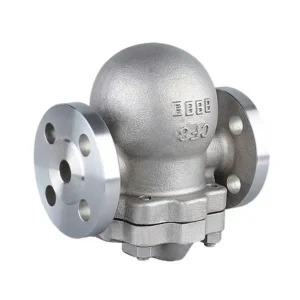
A Steam Trap is a specialized valve that distinguishes between steam and condensate. It removes water (condensate) and air while preventing the escape of live steam.
Working Principle: Available in mechanical (float), thermodynamic (disc), or thermostatic (bimetallic) designs based on density or temperature differences.
Key Advantage: Critical for energy saving, reducing steam loss to $\leq 0.5\%$.
Applications: Steam heating systems, power plants, and chemical heat exchangers.
8. Air Release Valves: Eliminating Air Pockets
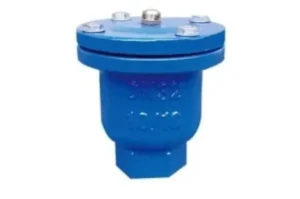
Accumulated air in a pipeline causes “air locks,” reduces flow efficiency, and triggers dangerous pressure surges.
Working Principle: A float rises and falls with the liquid level. When air accumulates, the float drops, opening an orifice to vent the air.
Key Advantage: Prevents pump cavitation and ensures the pipe remains at full capacity.
Applications: Municipal water networks, irrigation, and HVAC chilled water loops.
Selection Logic: How to Choose a “Special Forces” Valve
When moving beyond standard valves, engineers should follow these four principles:
Media Dominance: For abrasive/corrosive media, choose Pinch or Knife Gate valves.
Function Matching: If the goal is protection, use Vacuum Breakers or Relief Valves. If the goal is efficiency, use Steam Traps.
Maintenance Profile: In remote or hard-to-access areas, the Duckbill Valve is preferred due to its 30-year maintenance-free lifespan.
Automation Readiness: For precise metering of powders, the Rotary Valve with a VFD-controlled motor is essential.
🚀 Conclusion
Specialized valves are the insurance policy for industrial infrastructure. By matching the specific mechanical advantage of a pinch, duckbill, or airlock valve to the unique pain points of your pipeline, you can eliminate downtime and drastically reduce long-term operational costs.