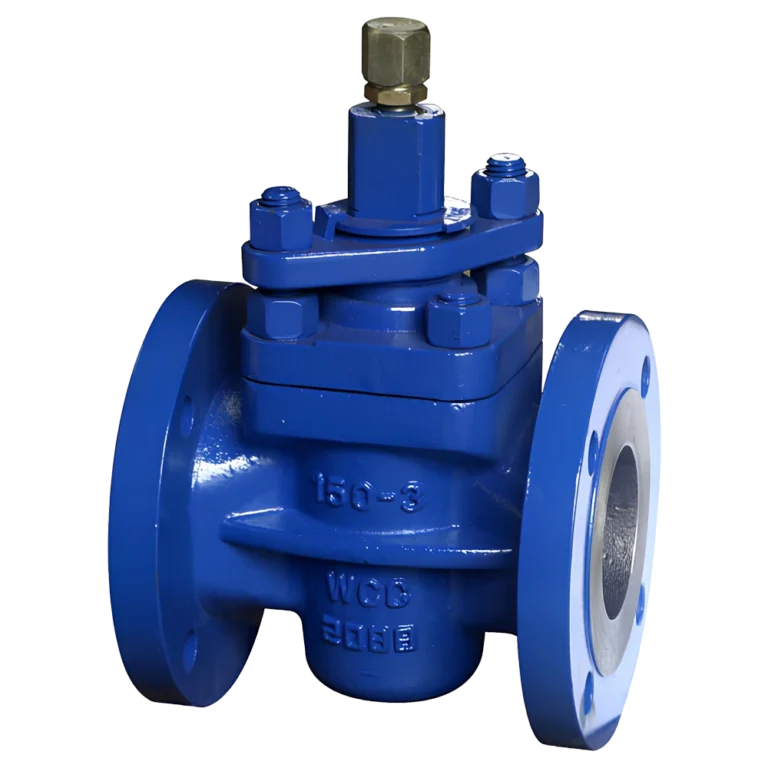
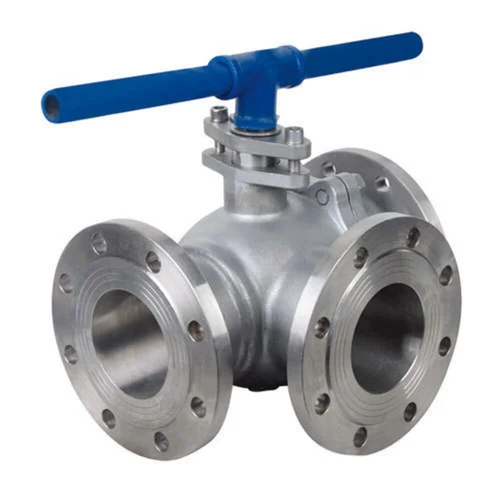
3-Way Pneumatic Control Valve (Three-Way Control Valve)
The 3-Way Pneumatic Control Valve is a sophisticated final control element used extensively in industrial automation. By receiving a control signal from a control unit, it uses pneumatic power to accurately change the flow path, allowing for mixing or diverting of media, which in turn regulates process parameters like flow rate, pressure, temperature, and level.
The 3-Way Pneumatic Control Valve is a sophisticated final control element used extensively in industrial automation. By receiving a control signal from a control unit, it uses pneumatic power to accurately change the flow path, allowing for mixing or diverting of media, which in turn regulates process parameters like flow rate, pressure, temperature, and level.
This particular valve, featuring a 3-way converging or mixing plug form, is designed for high control precision and adaptability across diverse industrial applications.
Advanced Design and Performance Characteristics
- High Control Accuracy: Offers precision control within $0.3\%$ to $1\%$ accuracy.
- Wide Adjustable Range: Capable of handling significant variations in flow and process conditions.
- Large Allowable Pressure Differential: Designed to maintain stability and shut-off capability even under high differential pressures.
- Enhanced Flow Management: Features large flow capacity, multi-stage pressure reduction, low noise, anti-cavitation, and wear resistance, significantly extending its service life.
- Built-in Balance Seal Ring: Enhances sealing performance, supports frequent operation, helps eliminate flash evaporation and cavitation, and extends the service life of the plug and seat.
- Integral Stuffing Box: Provides compensating sealing, dust protection, vibration dampening, and ensures smooth, stable flow.
Detailed Technical Specifications
| Parameter | Specification | Notes |
| Nominal Diameter (DN) | DN15 to DN500 | Wide range for small lines up to large headers. |
| Nominal Pressure | 1.6 –6.4MPa (PN16 to PN64) | Higher pressure ratings available upon request. |
| Valve Body Material | Carbon Steel (C), Stainless Steel 304 (P), Stainless Steel 316 (R) | Selection depends on medium compatibility and corrosion requirements. |
| Seal Material | PTFE (F), Metal Hard Seal (H), Hard Alloy (Y) | Soft seals (PTFE) for tight shut-off; Hard seals for high temperature/pressure/abrasion. |
| Medium Temperature | W2:-20~150℃ | W3:-20~250℃ |
| Connection Type | Flange, Internal Thread, Butt Weld | Versatile connection options for different piping standards. |
| Plug Form | 3-Way Converging (Mixing) | Designed for combining two inlet streams into one outlet. Diverting (splitting) configurations may also be available. |
| Flow Characteristic | Equal Percentage Characteristic | Provides high rangeability and stable control across the operating range. |
| Actuator Type | Pneumatic (ZHA, ZHB series, or imported actuators) | Uses compressed air as the power source for precise positioning. |
| Control Signal | 4-20mA, 0-10V, 1-5V | Compatible with standard industrial control system outputs. |
| Control Mode | Single-Acting Normally Closed, Single-Acting Normally Open | Defines the valve’s fail-safe position upon loss of air supply. |
| Stroke | 10, 16, 25, 40, 60, 100 mm | Range of travels for precise throttling control. |
Application Fields
This versatile control valve is suitable for regulating various mediums, including air, water, steam, corrosive media, slurry, and oil products, across numerous sectors:
- Process Industries: Chemical, Power Generation, Metallurgy, Environmental Protection, Water Treatment.
- HVAC & Utilities: Air Conditioning, Heating, Ventilation, Hot Water Systems.
Fast Response & Competitive Pricing Start Here
* We are not just providing simple quotes but experts in selection, calculation, and drawing.