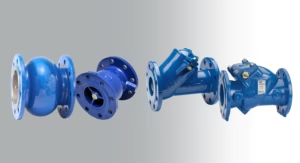
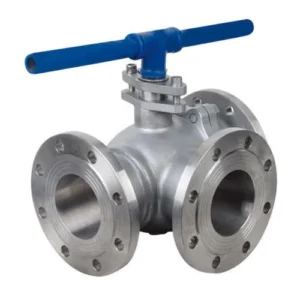
A tight shut-off valve is a valve designed to completely stop flow when it is in the closed position, with no measurable leakage allowed through the valve. These valves meet strict leakage standards and are used in applications where safety, efficiency, and process control require an absolutely reliable seal.

What Is a Tight Shut-Off Valve?
A tight shut-off (TSO) valve is any valve engineered to provide a zero-leakage seal under specified pressure and temperature conditions. When fully closed, the valve prevents fluid or gas from passing through—unlike some control valves that allow a small, acceptable leakage rate.
This term is commonly used in:
Process control systems
Chemical and petrochemical plants
Oil & gas pipelines
Water and wastewater treatment
HVAC systems
Steam and high-pressure applications
Tight shut-off performance is often defined by standards such as API 598, ANSI/FCI 70-2 Class VI, or IEC 60534-4.
Key Characteristics of Tight Shut-Off Valves
✔ Zero or near-zero leakage
The valve seats are designed to seal perfectly.
Often uses soft seats (e.g., PTFE, rubber) or precision-machined metal seats.
✔ High reliability
Ensures complete isolation in critical applications.
✔ Pressure-resistant sealing
Must maintain a perfect seal even under high differential pressure.
✔ Repeatable shut-off
Performs a full tight seal even after many open/close cycles.
Types of Valves That Provide Tight Shut-Off
Certain valve designs are known for tight shut-off capability:
1. Ball Valves
Excellent for bubble-tight shut off
Soft-seated ball valves are most common for TSO
2. Butterfly Valves
High-performance or triple-offset butterfly valves can achieve tight shut-off
Used in high-pressure and steam applications
3. Plug Valves
Provide a strong seal with minimal leakage
4. Globe/Control Valves (Class VI)
With soft seats, they can meet “zero leakage” standards
5. Gate Valves
Some designs offer tight isolation, especially in water systems
Where Tight Shut-Off Valves Are Needed
Tight shut-off is required when:
Leakage could cause safety hazards (e.g., flammable gas lines)
System shutdown or maintenance requires total isolation
Precise process control is necessary
Environmental regulations restrict emissions or leakage
Preventing backflow or contamination is critical
Common industries:
Oil and gas
Chemical processing
Power plants
Water treatment
HVAC chilled and hot water systems
Tight Shut-Off vs. Standard Shut-Off
| Feature | Tight Shut-Off Valve | Standard Valve |
|---|---|---|
| Leakage | Zero or near-zero | Small allowable leakage |
| Seat material | Soft seat or precision metal | Standard metal seats |
| Cost | Higher | Lower |
| Applications | Critical systems | General use |
Conclusion
A tight shut-off valve is engineered to achieve zero leakage when closed, ensuring complete isolation and maximum safety. These valves are essential in industries where even minor leakage is unacceptable.