When designing an irrigation system or plumbing layout, protecting your clean water supply is the top priority. While anti-siphon valves and backflow preventers both stop contamination, they are used in very different ways.

This guide breaks down the differences, local code requirements, and how to choose the right one for your project.
Quick Summary: Which One Do You Need?
| If your project involves… | Recommended Device |
| Small residential irrigation (Above ground) | Anti-Siphon Valve |
| Valves installed underground / in a box | Backflow Preventer (PVB/RPZ) |
| Whole-house or Commercial protection | Backflow Preventer (RPZ/DCVA) |
| Using fertilizers or chemicals | Backflow Preventer (High Hazard – RPZ) |
What Is an Anti-Siphon Valve?

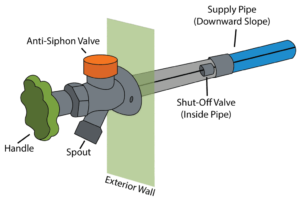
An anti-siphon valve is a “2-in-1” device. It combines an irrigation control valve (which turns the water on/off) with an atmospheric vacuum breaker (the anti-siphon part).
How it Works: When water pressure drops, a built-in float falls, opening an air vent. This breaks the vacuum (siphon) and prevents dirty water from being sucked backward into your home.
Critical Rule: It must be installed 6–12 inches above the highest sprinkler head in the zone. It cannot be under continuous pressure (it must be the last valve before the sprinklers).
What Is a Backflow Preventer?

A backflow preventer is a dedicated plumbing safety assembly. Unlike an anti-siphon valve, it does not control your sprinklers; it only guards the water line.
How it Works: These devices are more robust. They protect against both back-siphonage (vacuum) and backpressure (when the downstream pressure becomes higher than the supply pressure).
Common Types:
PVB (Pressure Vacuum Breaker): Standard for most residential irrigation.
RPZ (Reduced Pressure Zone): The “Gold Standard” for high-risk areas or where chemicals are used.
DCVA (Double Check Valve): Often allowed for underground installation in low-hazard areas.
Key Differences at a Glance
| Feature | Anti-Siphon Valve | Backflow Preventer |
| Function | Controls zone + prevents siphon | Dedicated safety device only |
| Protection | Back-siphonage only | Back-siphonage + Backpressure |
| Installation | Must be 6″+ above ground | Above or below ground (depends on type) |
| Testing | Non-testable (Replace if failed) | Often testable/certifiable |
| Cost | Budget-friendly | Mid-to-High investment |
How to Identify What You Already Have
If you are looking at your yard and aren’t sure what’s installed, check for these visual cues:
Anti-Siphon Valve: Look for a group of green or gray plastic valves sticking out of the ground. They usually have a large round plastic cap on top.
Backflow Preventer: Usually a large brass assembly located near your water meter or where the main line enters the house. It often has two shut-off handles and small “test cocks” (tiny valves) for annual inspections.
FAQ
Q: Can I install an anti-siphon valve underground? A: No. If buried, the air vent will fail, or dirt will enter the valve, leading to leaks and potential water contamination.
Q: Do I need a backflow preventer if I already have anti-siphon valves? A: Generally, no. Anti-siphon valves provide zone-level protection. However, if your local code requires “whole-system” protection at the main point of entry, you may still need a master backflow preventer.
Q: Why is a backflow preventer more expensive? A: They are built with heavy-duty materials (usually brass) and are designed to be tested and repaired rather than replaced. They offer a much higher level of safety.
Q: Can I use both together? A: It is unnecessary and often causes “pressure drop” issues. Choose one method based on your local plumbing codes.
Conclusion: Which One Should You Choose?
Choose Anti-Siphon Valves if you are on a budget, have a simple residential yard, and don’t mind seeing the valves above ground.
Choose a Backflow Preventer if you want to hide your irrigation valves underground, if you use a fertigation system, or if your local building department requires a certified, testable device.
Always check with your local water authority before installation to ensure your choice meets city codes.