
Quick Answer
Water shut off valves come in three main categories: by mechanism (gate, ball, globe), by location (main, fixture, appliance), and by material (brass, bronze, plastic). Ball valves are the modern standard for reliability, while gate valves are common in older homes. Choose based on your application, flow requirements, and budget.
Most common: Ball valves (quarter-turn, reliable), Gate valves (multi-turn, older homes), Angle stops (under sinks and toilets).
Understanding Valve Types
Why Valve Type Matters
Different water shut off valves serve different purposes throughout your home’s plumbing system. Using the right type ensures:
- Reliable operation when you need it
- Appropriate flow capacity
- Longevity and durability
- Compliance with building codes
- Ease of maintenance
The wrong valve can lead to: Leaks, inability to shut off water during emergencies, premature failure, and costly repairs.
Types by Mechanism
1. Ball Valves (Quarter-Turn)
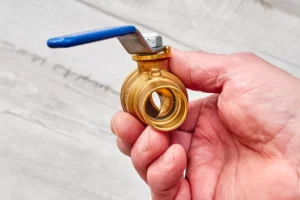
How they work: A ball with a hole through the center rotates inside the valve. When the hole aligns with the pipe, water flows. A quarter-turn perpendicular blocks flow completely.
Visual identification:
- Lever handle
- Single quarter-turn operation
- Handle parallel to pipe = OPEN
- Handle perpendicular to pipe = CLOSED
Advantages:
- ✅ Fast operation (quarter-turn)
- ✅ Clear visual on/off indicator
- ✅ Highly reliable (rarely fail)
- ✅ Works after years of non-use
- ✅ Full flow with minimal restriction
- ✅ Durable (20-30 year lifespan)
Disadvantages:
- ❌ More expensive initially ($15-40)
- ❌ Handle can break (though body still works)
Best applications:
- Main water shut offs
- New construction or replacements
- Anywhere reliability is critical
- High-pressure applications
Cost: $15-40 (residential), $50-200 (commercial)
2. Gate Valves (Multi-Turn)

How they work: A wedge-shaped gate slides up and down inside the valve body. Turning the wheel lifts the gate (open) or lowers it (closed). Requires multiple full rotations.
Visual identification:
- Round wheel-shaped handle
- Requires 5-10 full turns to operate
- No visual on/off indication
- Usually brass or bronze body
Advantages:
- ✅ Full flow when open (no restriction)
- ✅ Durable design
- ✅ Lower initial cost ($10-30)
- ✅ Good for larger pipe sizes
Disadvantages:
- ❌ Slow to operate (many turns)
- ❌ Internal gate can stick or corrode
- ❌ May leak after years of non-use
- ❌ Requires periodic exercise (testing)
- ❌ No visual position indicator
Best applications:
- Older homes (already installed)
- Large diameter pipes (2″+)
- Infrequent operation
- Budget-conscious installations
Cost: $10-30 (residential), $40-100 (commercial)
Important: Many plumbing codes now require ball valves instead of gate valves for new installations.
3. Globe Valves
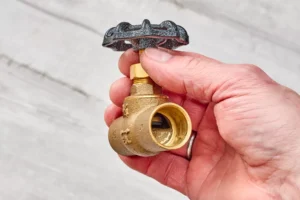
How they work: An internal disc moves up and down against a valve seat. The disc compresses onto the seat to stop flow. Can be positioned anywhere between fully open and fully closed.
Visual identification:
- Round handle (similar to gate valve)
- Bulbous, spherical body shape
- Usually smaller than gate valves
- Often has arrows indicating flow direction
Advantages:
- ✅ Excellent for throttling (flow control)
- ✅ Precise flow adjustment
- ✅ Good shutoff seal
- ✅ Available in many sizes
Disadvantages:
- ❌ Restricts flow even when fully open
- ❌ Higher pressure drop than gate or ball valves
- ❌ Not ideal for main shutoffs
- ❌ More complex internal design
Best applications:
- Flow control applications
- Hose bibbs (outdoor faucets)
- Where precise regulation needed
- Not typically used for main shutoffs
Cost: $15-40
4. Angle Stop Valves
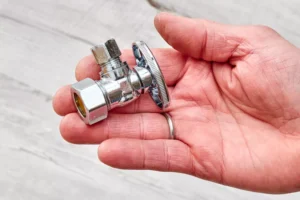
How they work: Combination of globe valve mechanism in a 90-degree angle body. Input and output connections are perpendicular to each other.
Visual identification:
- L-shaped or 90-degree angle design
- Small, compact size
- Usually chrome-plated
- Found under sinks and behind toilets
Advantages:
- ✅ Space-saving design
- ✅ Combines shutoff and direction change
- ✅ Easy to install in tight spaces
- ✅ Eliminates need for elbow fitting
Disadvantages:
- ❌ Only suitable for fixture connections
- ❌ Not for main lines
- ❌ Limited size range (typically 1/2″ or 3/8″)
Best applications:
- Under bathroom and kitchen sinks
- Behind toilets
- Washing machine connections
- Individual fixture control
Types of angle stops:
- Multi-turn (traditional)
- Quarter-turn (modern, more reliable)
- Compression connection (no soldering)
- Sweat connection (soldered)
Cost: $5-15 each
5. Butterfly Valves
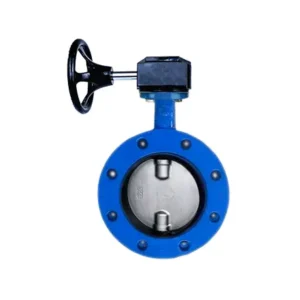
How they work: A disc rotates on a shaft inside the valve body. When perpendicular to flow, it blocks water. When parallel, water flows around it.
Visual identification:
- Thin, wafer-style body
- Lever or gear operator
- Large diameter capabilities
- Compact compared to gate valves
Advantages:
- ✅ Lightweight and compact
- ✅ Quick operation
- ✅ Lower cost for large sizes (3″+)
- ✅ Good for high flow applications
Disadvantages:
- ❌ Some flow restriction even when open
- ❌ Not suitable for small residential pipes
- ❌ Requires more maintenance
Best applications:
- Large commercial/industrial lines
- Fire protection systems
- Irrigation main lines
- Municipal water systems
Cost: $100-500+ (depends on size)
Note: Rarely used in typical residential plumbing.
Types by Location and Function
Main Shut Off Valves

Purpose: Control all water entering your home.
Typical valve types:
- Ball valve (preferred, modern)
- Gate valve (older homes)
Common locations:
- Basement near front wall
- Utility/mechanical room
- Crawl space
- Outside at curb box
Size: Usually 3/4″ to 1″ diameter
For complete guide on main valves, see: Water Main Shut Off Valve: Location & How to Use
Fixture Shut Off Valves
Purpose: Control water to individual sinks, toilets, and tubs.
Typical valve types:
- Angle stop (most common)
- Straight stop
- Quarter-turn ball valve
Common locations:
- Under bathroom sinks (2 valves: hot and cold)
- Under kitchen sinks (2 valves)
- Behind toilets (1 valve: cold only)
- Behind washing machines (2 valves)
Size: Usually 1/2″ supply to 3/8″ outlet
Connection types:
- Compression (no soldering required)
- Sweat/solder
- Push-fit (SharkBite style)
- Threaded
Why important: Allows repair or replacement of individual fixtures without shutting off entire house.
Appliance Valves
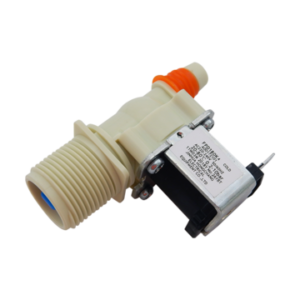
Purpose: Control water to specific appliances.
Common appliances with shutoffs:
Water Heater:
- Cold inlet valve (always present)
- Sometimes hot outlet valve
- Usually ball or gate valve
- Size: 3/4″ typical
Washing Machine:
- Two valves (hot and cold)
- Often with hose thread connections
- Lever or knob style
- May have auto-shutoff feature
Dishwasher:
- Usually 3/8″ angle stop under sink
- Sometimes dedicated valve
- Hot water only
Refrigerator Ice Maker:
- Small saddle valve or angle stop
- 1/4″ or 3/8″ line
- Often under sink or in basement
Outdoor Valves
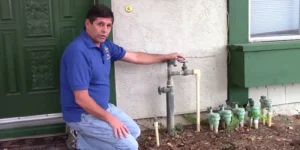
Hose Bibs (Outdoor Faucets):
Standard hose bib:
- Globe valve mechanism
- Usually has vacuum breaker
- 1/2″ or 3/4″ connection
- Freezes in winter
Frost-free hose bib:
- Valve seat inside heated space
- Long stem (6″-12″)
- Drains automatically
- Prevents freezing
Anti-siphon hose bib:
- Built-in backflow prevention
- Required by code in many areas
- Prevents contamination
Irrigation valves:
- Usually ball or gate valves
- Manual or automatic
- Multiple zones
Types by Material
Brass Valves
Characteristics:
- Gold/yellow color
- Heavy, solid feel
- Corrosion-resistant
- Standard for most applications
Advantages:
- ✅ Excellent durability (30+ years)
- ✅ Resists corrosion
- ✅ Handles hot water well
- ✅ Industry standard
Disadvantages:
- ❌ More expensive
- ❌ Can dezincify in certain water conditions
Best for: Main shutoffs, hot water lines, permanent installations
Cost: $20-60 for residential valves
Bronze Valves
Characteristics:
- Reddish-brown color
- Similar to brass but different alloy
- Very durable
- Often used in marine applications
Advantages:
- ✅ Superior corrosion resistance
- ✅ Excellent for saltwater/coastal areas
- ✅ Very long lifespan
- ✅ Handles pressure well
Disadvantages:
- ❌ Most expensive material
- ❌ Overkill for most residential use
Best for: Coastal homes, well water systems, high-quality installations
Cost: $30-80 for residential valves
Stainless Steel Valves
Characteristics:
- Silver/metallic appearance
- Extremely corrosion-resistant
- Modern aesthetic
- Premium material
Advantages:
- ✅ Will not corrode
- ✅ Ideal for harsh water
- ✅ Clean, modern look
- ✅ Food-grade safe
Disadvantages:
- ❌ Expensive
- ❌ Limited availability for residential
- ❌ May require special fittings
Best for: Harsh water conditions, visible installations, commercial kitchens
Cost: $40-100+
PVC/Plastic Valves
Characteristics:
- White or gray color
- Lightweight
- Usually threaded or solvent-welded
- Limited temperature range
Advantages:
- ✅ Lowest cost
- ✅ Never corrodes
- ✅ Easy to install (solvent weld or thread)
- ✅ Lightweight
Disadvantages:
- ❌ Not for hot water (usually)
- ❌ Can become brittle over time
- ❌ UV damage if exposed to sun
- ❌ Lower pressure rating
- ❌ Not code-compliant everywhere
Best for: Cold water only, irrigation, pool systems, temporary installations
Cost: $5-20
Important: PVC valves often not allowed for main house shutoffs. Check local codes.
Valve Comparison Table
| Valve Type | Operation | Reliability | Cost | Best For | Lifespan |
|---|---|---|---|---|---|
| Ball Valve | Quarter-turn | Excellent | $$ | Main shutoffs | 20-30 years |
| Gate Valve | Multi-turn | Good | $ | Large pipes | 20-30 years |
| Globe Valve | Multi-turn | Good | $$ | Flow control | 15-25 years |
| Angle Stop | Varies | Good | $ | Fixtures | 10-20 years |
| Butterfly | Quarter-turn | Good | $$-$$$ | Large commercial | 20-30 years |
Material Comparison:
| Material | Durability | Corrosion Resistance | Cost | Applications |
|---|---|---|---|---|
| Brass | Excellent | Excellent | $$ | Standard residential |
| Bronze | Excellent | Superior | $$$ | Coastal, marine |
| Stainless | Excellent | Superior | $$$-$$$$ | Harsh water |
| PVC | Good | Excellent | $ | Cold water, irrigation |
How to Choose the Right Valve
By Application
Main house shutoff: → Ball valve (brass or bronze)
- Quarter-turn operation
- Most reliable
- Clear on/off indicator
Individual fixtures (sinks, toilets): → Angle stop, quarter-turn
- Compact design
- Easy replacement
- Compression connection (no soldering)
Outdoor faucets: → Frost-free hose bib
- Prevents freezing
- Drains automatically
- Long-stem design
Flow control needs: → Globe valve
- Precise throttling
- Good modulation
- Where adjustment needed
By Water Conditions
Normal municipal water: → Brass valves
- Standard quality
- Good for most homes
- Proven performance
Coastal/saltwater areas: → Bronze valves
- Superior corrosion resistance
- Worth the extra cost
- Long-term reliability
Hard water/well water: → Stainless steel or brass
- Resists mineral buildup
- Easy to clean
- Long service life
Cold water only (irrigation): → PVC ball valves
- Cost-effective
- Corrosion-proof
- Easy to work with
By Budget
Budget-conscious ($):
- Gate valves for mains
- Multi-turn angle stops
- PVC for irrigation
- DIY installation
Standard quality ($$):
- Ball valves for mains
- Quarter-turn angle stops
- Brass construction
- Professional installation recommended
Premium ($$$):
- Ball valves throughout
- Bronze or stainless steel
- Quarter-turn angle stops
- Professional installation
By Replacement Priority
Replace immediately if:
- Valve won’t close completely
- Leaking at handle
- Over 25-30 years old
- Failed during use
Plan replacement if:
- 15-20 years old
- Shows corrosion
- Difficult to operate
- Upgrading plumbing
Can wait if:
- Less than 10 years old
- Operates smoothly
- No leaks
- Tested regularly
Installation Considerations
Connection Types
Compression Fittings:
- No soldering required
- Good for DIY
- Most common for angle stops
- Can be removed and reused
Sweat/Solder Connections:
- Permanent installation
- Requires torch
- Professional quality
- Most reliable long-term
Threaded Connections:
- Screw together
- Use pipe dope or Teflon tape
- Common for iron pipe
- Can leak if not sealed properly
Push-Fit (SharkBite):
- No tools required
- Push pipe into fitting
- More expensive
- Good for quick repairs
- Some codes restrict use
Valve Orientation
Ball and gate valves:
- Can be installed in any orientation
- Horizontal preferred for ease of operation
- Vertical okay
Globe valves:
- Arrow indicates flow direction
- Must be installed correctly
- Check manufacturer instructions
Angle stops:
- Always 90-degree orientation
- Input and output perpendicular
Code Requirements
Check local codes for:
- Approved valve types
- Material requirements
- Backflow prevention needs
- Inspection requirements
- Permit needs
Common code requirements:
- Ball valves required for new main shutoffs
- Earthquake shutoff valves (some areas)
- Vacuum breakers on hose bibs
- Accessible main shutoff location
Maintenance by Valve Type
Ball Valves
Maintenance:
- Exercise twice yearly (open/close)
- Usually maintenance-free
- Replace if handle breaks or leaks
Lifespan: 20-30 years
Gate Valves
Maintenance:
- Exercise twice yearly (important!)
- Apply lubricant to stem threads
- Watch for packing nut leaks
- Replace worn packing
Lifespan: 20-30 years (if maintained)
Angle Stops
Maintenance:
- Exercise annually
- Check for leaks at compression fittings
- Replace if corroded
Lifespan: 10-20 years (fixture use)
Common issue: Mineral buildup on stems
Common Problems and Solutions
Problem 1: Valve Won’t Turn
Most common in: Gate valves, old angle stops
Solutions:
- Apply penetrating oil, wait 15 minutes
- Use gentle back-and-forth motion
- Don’t force (can break)
- May need replacement
Problem 2: Valve Leaks at Handle
Most common in: Gate valves, globe valves
Quick fix:
- Tighten packing nut (under handle)
- May stop drip temporarily
Permanent fix:
- Replace packing
- Or replace valve
Problem 3: Valve Won’t Close Completely
Most common in: Old gate valves
Cause:
- Corroded internal parts
- Gate damaged or stuck
Solution:
- Replacement required
- Cannot be repaired effectively
Problem 4: Compression Fitting Leaks
Most common in: Angle stops
Solutions:
- Tighten compression nut (1/4 turn at a time)
- If still leaks, turn off water and remake connection
- May need new ferrule
Upgrading Your Valves
When to Upgrade
Good reasons to upgrade:
- Replacing old gate valves with ball valves
- Upgrading multi-turn angle stops to quarter-turn
- Adding individual fixture shutoffs
- Improving accessibility
Benefits:
- Faster operation in emergencies
- More reliable performance
- Visual on/off indication
- Easier for anyone to operate
DIY vs Professional Installation
Good DIY projects:
- Replacing angle stops (if experienced)
- Installing outdoor hose bibs
- Adding fixture shutoffs
Hire a professional for:
- Main water shut off replacement (requires street shutoff)
- Soldered connections (if not experienced)
- Large valve installations
- Code-required work
Typical professional costs:
- Main valve replacement: $200-500
- Angle stop replacement: $100-150 each
- Outdoor hose bib: $150-300
Frequently Asked Questions
What’s the best type of shut off valve?
Ball valves are the best overall choice for reliability and ease of use. They offer quarter-turn operation, visual on/off indication, and rarely fail even after years of non-use. For main shutoffs and critical applications, ball valves are strongly recommended over gate valves.
Can I replace a gate valve with a ball valve?
Yes, and this is a common upgrade. Ball valves are more reliable and easier to operate. However, replacing a main shutoff valve requires turning off water at the street, so professional installation is recommended. Cost typically ranges from $200-500.
How long do water shut off valves last?
Ball valves and gate valves typically last 20-30 years. Fixture angle stops last 10-20 years. Lifespan depends on water quality, frequency of use, and whether the valve is exercised regularly. Brass and bronze valves last longer than plastic ones.
What’s the difference between brass and bronze valves?
Brass is a copper-zinc alloy (yellowish), while bronze is copper-tin (reddish-brown). Bronze has superior corrosion resistance and is preferred for marine/coastal applications and well water systems. Brass is standard for most residential plumbing and costs less.
Why do angle stops fail so often?
Angle stops are frequently operated during repairs and replacements, leading to more wear. They’re also exposed to mineral buildup from water. Many older angle stops are multi-turn gate-style, which are less reliable than modern quarter-turn ball-style angle stops.
Can I use PVC valves for my main shut off?
Generally no. Most building codes require metal valves (brass, bronze, or stainless steel) for main shutoffs due to pressure ratings, durability, and fire safety. PVC valves are typically limited to cold water applications like irrigation and may not be rated for the pressure of main water lines.
Do I need special tools to install shut off valves?
For compression-fitting angle stops, you need basic wrenches and possibly a tubing cutter. For soldered connections, you need a torch and soldering skills. Push-fit valves require no special tools but cost more. Main valve replacement requires professional equipment to access the street shutoff.
Should I replace all my valves at once?
Not necessarily. Replace valves based on age, condition, and priority:
- Immediate: Main shutoff if over 30 years old or not working
- High priority: Fixture valves that leak or won’t close
- Lower priority: Working valves under 15 years old
Upgrading during renovations is cost-effective since walls are already open.
Conclusion
Understanding water shut off valve types helps you make informed decisions about repairs, replacements, and upgrades. The right valve depends on your specific application, water conditions, and budget.
Key recommendations:
For main shutoffs:
- ✅ Choose ball valves (brass or bronze)
- ✅ Quarter-turn operation is essential
- ✅ Test twice yearly
- ✅ Replace gate valves when upgrading
For fixtures:
- ✅ Use quarter-turn angle stops
- ✅ Compression fittings for easy replacement
- ✅ Install individual shutoffs for all fixtures
- ✅ Replace if over 15 years old
For outdoor:
- ✅ Install frost-free hose bibs in cold climates
- ✅ Add anti-siphon feature
- ✅ Drain before winter
General tips:
- Exercise all valves twice yearly
- Replace proactively (don’t wait for failure)
- Upgrade to ball valves when replacing
- Keep valve locations documented
- Have a plumber’s number ready
Investing in quality shut off valves and maintaining them properly provides peace of mind and can prevent thousands of dollars in water damage during emergencies.


