Quick Answer
An automatic water shut off valve is a smart device that monitors your home’s water system and automatically closes the main water supply when it detects a leak, abnormal flow, or freezing conditions. It connects to your smartphone and can save you from thousands of dollars in water damage—the average water damage claim costs over $10,000.
How it works: Sensors detect leaks → Alert sent to your phone → Valve automatically closes (or you close it remotely) → Water damage prevented.
What Is an Automatic Water Shut Off Valve?
The Simple Explanation
Think of it as a smart security system for your plumbing. Just like a security alarm watches for burglars, an automatic water shut off valve watches for leaks, burst pipes, and water problems. When it detects something wrong, it either alerts you or automatically shuts off your water supply.
What it does:
- Monitors water flow 24/7
- Detects leaks as small as a drop per minute
- Sends alerts to your smartphone
- Closes water valve automatically (or remotely)
- Prevents water damage while you’re home or away
Why You Need One
The problem: Water damage is the #2 most common insurance claim in the U.S., causing over $13 billion in damage annually.
Common causes:
- Burst washing machine hoses
- Failed water heater tanks
- Frozen and burst pipes
- Toilet supply line failures
- Leaking dishwashers
- Corroded pipes
One burst pipe can release 400+ gallons per hour. In just 8 hours (a workday), that’s 3,200 gallons flooding your home.
The solution: An automatic shut off valve catches problems early and stops water flow before major damage occurs.
How Automatic Water Shut Off Valves Work

The Basic System
Three main components:
- Smart Valve
- Installed on your main water line
- Motor-controlled shutoff
- Opens and closes on command
- Sensors/Monitoring System
- Flow sensors (in the valve)
- Pressure sensors
- Optional: leak sensors placed around home
- App/Control System
- Connects via Wi-Fi
- Sends alerts to smartphone
- Allows remote control
- Tracks water usage
How It Detects Leaks

Three detection methods:
1. Flow Monitoring Measures water flowing through pipes continuously. Phyn Plus measures tiny changes in pressure 240 times every second to understand the unique voice of each water fixture.
Detects:
- Continuous flow when no fixtures should be running
- Abnormal flow patterns
- Running toilets
- Dripping faucets
2. Pressure Analysis Monitors water pressure in your pipes.
Detects:
- Sudden pressure drops (burst pipe)
- Pressure spikes (can damage fixtures)
- Slow leaks that change pressure over time
3. Remote Leak Sensors Small wireless sensors placed in leak-prone areas.
Detects:
- Water on floor under sinks
- Leaks near water heaters
- Washing machine overflows
- Basement flooding
When It Shuts Off Water
Automatic shutoff triggers:
Major leak detected:
- Continuous high flow (2-15 GPM for 5-30 minutes)
- Burst pipe scenario
- System closes valve immediately
Away mode triggered:
- Any flow lasting more than 5 seconds when you’re gone
- Protects while on vacation
- You control the settings
Freeze protection:
- Low temp monitors look for critically low temperatures, water is proactively shut off before pipes can freeze
- Prevents frozen pipe bursts
- Temperature alerts sent first
Manual trigger:
- You close valve from smartphone app
- Works from anywhere with internet
- Instant response
Smart Learning Features
Modern systems learn your water usage patterns:
Learning period: After this initial learning period, which is different for every home, it will unlock the ability to turn off your water automatically in the event of an abnormally high flow
What it learns:
- When you typically shower
- How long showers usually last
- Dishwasher and washing machine cycles
- Lawn irrigation patterns
- Toilet flush frequency
Benefits:
- Fewer false alarms
- More accurate leak detection
- Smart alerts for unusual patterns
- Personalized to your home
Types of Automatic Shut Off Systems
1. Whole-House Smart Systems
What they are: Complete systems installed on your main water line with advanced monitoring.
Top brands:
- Flo by Moen ($500-600)
- Phyn Plus ($700-850)
- FloLogic ($900-1,200)
- StreamLabs Control ($500-700)
Features:
- Learns your home’s water usage patterns to identify abnormalities like running water or small leaks and will automatically turn off water
- Flow, pressure, and temperature monitoring
- Smartphone app control
- Usage tracking and analytics
- Professional installation recommended
Best for:
- Primary residence
- Vacation homes
- Protecting entire property
- Insurance discounts (some companies offer 5-15%)
Installation:
- On main water line after meter
- Requires shutting off water at street
- Electrical outlet needed
- Takes 2-4 hours professional install
2. Motorized Valve + Sensors
What they are: Motorized shutoff valve combined with separate leak detection sensors.
Systems:
- leakSMART ($300-500)
- YoLink ($200-400)
- E-SDS ($150-300)
How they work:
- Detects water leaks and signals hub in less than 5 seconds, immediately shuts off your water when a leak is detected
- Wireless sensors placed under sinks, near water heaters, etc.
- When sensor gets wet, signals valve to close
- App sends alert
Best for:
- Budget-conscious homeowners
- Specific protection areas (laundry, water heater)
- DIY installation
- Renters (can take with you)
Installation:
- Valve on main line (or appliance line)
- Sensors anywhere water might leak
- Battery or plug-in powered
- DIY-friendly (1-2 hours)
3. Valve Operator Adapters
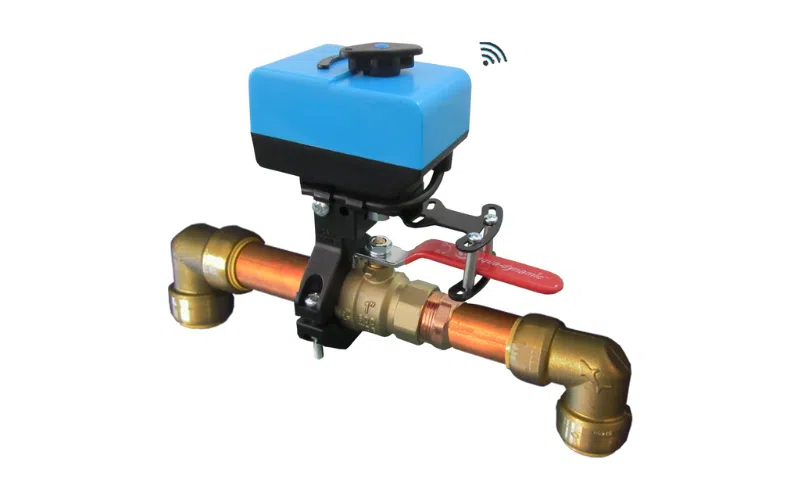
What they are: Smart motor that attaches to your existing ball valve handle.
Products:
- YoLink EVO Valve Operator ($150-200)
- The EVO replaces your ball valve handle and attaches directly to the ball valve, eliminating issues experienced with larger, older, and/or stiffer valves
Features:
- No plumbing work required
- Works with standard ball valves
- App-controlled
- Pairs with leak sensors
- Battery backup
Best for:
- Existing valve upgrade
- DIY installation
- No plumber needed
- Budget option
Installation:
- Remove existing valve handle
- Attach motor operator
- Connect to app
- Takes 15-30 minutes
4. Simple Appliance Shutoffs
What they are: Basic automatic valves for individual appliances.
Common types:
- Washing machine auto-shutoff hoses
- Water heater drain pan sensors with valve
- Under-sink leak detectors with valve
Features:
- Appliance-specific protection
- No smartphone connection (usually)
- Local alarm only
- Very affordable ($50-150)
Best for:
- Protecting specific appliances
- Budget solution
- No Wi-Fi needed
- Easy DIY install
Limitations:
- Only protects one appliance
- No remote control
- No usage monitoring
- No smart features
Top Smart Water Shut Off Systems Compared
Flo by Moen (900-006)
Price: $550-650 Installation: Professional recommended
Key features:
- Monitors pressure and flow rate continuously, detecting leaks as small as a drop per minute
- FloSense technology learns your usage
- Real-time app notifications (phone, email, text)
- Automatic or manual shutoff
- Daily water usage reports
Best for: Complete protection, tech-savvy homeowners
Pros:
- Excellent leak detection accuracy
- Strong customer support
- Good app interface
- NSF certified for drinking water
Cons:
- More expensive
- Professional install needed ($150-300 additional)
- Subscription required for some features ($60/year)
Phyn Plus (2nd Generation)
Price: $700-850 Installation: Professional required
Key features:
- Uses patented, high-definition pressure wave analysis to alert you the second a leak is detected
- 240 pressure readings per second
- Plumbing Check feature (detects hidden flaws)
- Learns fixture-by-fixture usage
- Freeze warnings
Best for: Most accurate detection, whole-home monitoring
Pros:
- Industry-leading accuracy
- Identifies which fixture is leaking
- No subscription required
- Detailed water insights
Cons:
- Highest price
- Complex installation
- May require adapters depending on plumbing, 1″ NPSM threaded ends
StreamLabs Control
Price: $500-700 Installation: DIY or professional
Key features:
- Ultrasonic technology, works with old galvanized pipes when Flo by MOEN will NOT
- Drip Detect runs daily, weekly, or monthly pressure tests to detect any small or large leaks
- Configurable alerts (flow, pressure, temperature, humidity)
- Compatible with multiple pipe sizes (3/4″ to 2″)
- 10-foot power cord included
Best for: Older homes, flexible installation, detailed monitoring
Pros:
- Works with older pipe types
- Highly customizable alerts
- Good for DIY installation
- Detailed usage analytics
Cons:
- App can be complex to set up
- Requires electrical outlet nearby
- Some users report connectivity issues
FloLogic System
Price: $900-1,200 Installation: Professional required
Key features:
- Identifies leaks when they start, as small as 1/2-ounce-per-minute
- EverWatch technology monitors constantly
- Battery backup (works during power outages)
- Local control (works without internet)
- Made in USA
Best for: Premium protection, reliable operation, power/internet outages
Pros:
- Very accurate leak detection
- Works without power or internet
- Home and Away modes
- Insurance professional recommended
Cons:
- Most expensive option
- Professional install required
- Bulkier unit
YoLink Leak Detection Kit
Price: $200-400 Installation: DIY-friendly
Key features:
- EVO Valve Operator replaces ball valve handle, simple no-plumber-required DIY installation
- LoRa long-range wireless (works farther than Wi-Fi)
- Multiple leak sensors included
- 10-year battery on sensors
- Works during internet outages
Best for: DIY installation, budget-conscious, long range
Pros:
- Most affordable complete system
- Easy DIY installation (no plumber)
- Excellent wireless range
- Very long sensor battery life
Cons:
- Less sophisticated than premium systems
- Requires separate hub device
- Basic app interface
- No usage analytics
Comparison Table
| System | Price | DIY Install? | Leak Detection | Smart Features | Best For |
|---|---|---|---|---|---|
| Flo by Moen | $$ | No | Excellent | Excellent | Complete protection |
| Phyn Plus | $$$ | No | Outstanding | Outstanding | Maximum accuracy |
| StreamLabs | $$ | Yes | Excellent | Excellent | Older homes, DIY |
| FloLogic | $$$ | No | Excellent | Good | Reliability, backup |
| YoLink | $ | Yes | Good | Basic | Budget, DIY |
Installation Guide
Where to Install
Main water line location:
- After your water meter (typical)
- Before water splits to different areas
- Usually in basement, crawl space, or utility room
- Phyn Plus is installed on the main water line, right after your water meter or where the water enters your home
Requirements:
- Electrical outlet nearby (within 10 feet typically)
- Access to shut off water at street
- Enough space for device (check dimensions)
- Clear of obstructions
Special considerations:
- If you have a fire sprinkler system that is standalone and is on its own branch, Phyn Plus can be installed as long as it is placed after where your sprinkler line branches off
- Some systems not approved if insurance requires shutoff (check first)
DIY vs Professional Installation
DIY-friendly systems:
- YoLink EVO Valve Operator
- StreamLabs Control
- leakSMART (with some plumbing knowledge)
- Simple appliance valves
Requires professional:
- Flo by Moen
- Phyn Plus
- FloLogic
- Any system if you’re not comfortable with plumbing
Why professional is recommended:
- Requires shutting water at street
- Cutting into main water line
- Electrical connections
- Proper testing
- Warranty requirements (some systems)
Professional install cost: $150-400 typically
Basic Installation Steps (Professional)
For whole-house systems:
- Turn off water at street
- Use meter key to close curb valve
- Open faucets to drain pressure
- Cut main water line
- Mark cut locations (device length + fittings)
- Use pipe cutter for clean cuts
- Deburr cut edges
- Install fittings
- May need SharkBite, threaded, or compression fittings
- Depends on pipe type and device
- Follow manufacturer specs
- Mount device
- Secure to wall or mounting bracket
- Leave room for maintenance
- Connect to fittings
- Electrical connection
- Plug into nearby outlet
- Run power cord neatly
- Ensure outlet not controlled by switch
- Turn water back on
- Slowly open street valve
- Check all connections for leaks
- Watch device power up
- Connect to app
- Download manufacturer app
- Create account
- Follow setup wizard
- Connect to Wi-Fi
- Test operation
- Install leak sensors (if included)
- Under sinks
- Near water heater
- By washing machine
- Basement floor
Total time: 2-4 hours for professional
How Much Does It Cost?
System Costs
Entry-level ($150-400):
- Motorized valve + sensors
- YoLink, E-SDS, basic systems
- DIY installation
- Basic features
Mid-range ($500-700):
- StreamLabs Control
- Flo by Moen
- Good features and monitoring
- DIY or professional install
Premium ($700-1,200):
- Phyn Plus
- FloLogic
- Advanced detection
- Professional installation required
Additional Costs
Installation: $150-400 (if professional)
Subscription fees (some systems):
- Flo by Moen: $60/year for premium features
- Most others: No subscription required
Leak sensors (additional):
- $30-60 each if you want more coverage
- Wireless, battery-powered
- Place in high-risk areas
Total investment:
- DIY basic: $200-400
- DIY premium: $500-800
- Professional install: $650-1,600
Cost Savings
Insurance discounts:
- 5-15% reduction on homeowners insurance (some companies)
- Check with your insurance provider
- May require proof of installation
Water bill savings:
- Catch toilet leaks early (can waste 200 gallons/day)
- Detect irrigation problems
- Can potentially reduce annual household water waste by up to 90%
- Monitor usage to reduce waste
Damage prevention:
- Average water damage claim: $10,000+
- System pays for itself with one prevented leak
- Peace of mind while traveling
Benefits Beyond Leak Detection
Water Usage Tracking
What you can see:
- Daily, weekly, monthly usage
- Usage by fixture (some systems)
- Hourly patterns
- Compare to similar homes
How it helps:
- Identify water waste
- Lower water bills
- Catch running toilets immediately
- Track conservation efforts
Freeze Protection
How it works:
- Monitors water temperature
- Sends alerts when temperatures drop
- Can shut off water before pipes freeze
- Prevents burst pipe damage
Critical for:
- Vacation homes
- Unheated areas (garages, crawl spaces)
- When you’re away in winter
- Protecting pipes during cold snaps
Vacation Mode
What it does:
- Vacation Mode gives you ability to manually shut off water while on trip
- Detects any water flow while away
- Immediately sends alerts
- Can auto-shutoff on any flow
Why it’s valuable:
- Most water damage happens when you’re away
- Catch problems immediately
- Remote control from anywhere
- Peace of mind during travel
Smart Home Integration
Works with:
- Amazon Alexa
- Google Home
- Apple HomeKit (some systems)
- IFTTT automations
What you can do:
- Voice commands to check status
- “Alexa, is my water on?”
- “Shut off the water”
- Integrate with other smart home devices
Common Questions and Concerns
Does it work during power outages?
Depends on system:
With battery backup:
- FloLogic: Yes, full function
- YoLink: Sensors have 10-year batteries
- Most systems: Valve stays in current position
Without battery backup:
- Phyn Plus will remain in the state it was in when power is lost, will not turn off water unless already closed
- Cannot operate valve without power
- No monitoring during outage
- Returns to normal when power restored
Workaround:
- Many systems have manual override
- Can use manual shut off tool included on mounting bracket to turn water on and off
Can I install it myself?
Yes, if:
- System is designed for DIY (YoLink, StreamLabs)
- You’re comfortable with basic plumbing
- You have SharkBite or compression fittings
- You can access main water line
No, hire professional if:
- System requires cutting pipes and soldering
- You’re not confident with plumbing
- You can’t shut off water at street yourself
- Warranty requires professional install
Will it shut off my water for no reason?
Rare with modern systems:
- Learning period prevents false alarms
- Smart algorithms distinguish normal from abnormal
- You set sensitivity levels
- Can disable auto-shutoff, keep alerts only
Common false alarms (early on):
- Filling a bathtub
- Using multiple fixtures simultaneously
- Irrigation system starting up
- Guest using more water than usual
Solution: Systems learn these patterns and stop alerting after learning period.
Do I need Wi-Fi?
Most systems yes:
- Required for app alerts
- Remote control
- Usage tracking
Some work without:
- FloLogic has local control
- YoLink uses LoRa (not Wi-Fi dependent)
- If out of range of Wi-Fi may want to consider adding repeater or extender
Weak Wi-Fi solution:
- Use Wi-Fi extender
- Some systems have better range than others
- Check signal strength at install location
What about my irrigation system?
Monitors irrigation if installed before the split:
- If Phyn Plus device able to be installed so it is “before” irrigation lines, then irrigation will be monitored
- Can set irrigation schedules in app
- Won’t alarm during normal watering
- Catches irrigation leaks
Separate irrigation valve:
- If irrigation valve is before smart shutoff
- System won’t monitor irrigation
- Consider separate protection for irrigation
Will it work with my old pipes?
Depends on system:
- StreamLabs works with old galvanized pipes when Flo by MOEN will NOT
- Most systems work with copper, PEX, CPVC
- Check compatibility before buying
- May need adapters for certain pipe types
Pipe size compatibility:
- Most residential: 3/4″ or 1″
- Check your main line size
- Systems specify compatible sizes
- Adapters available for some
Do You Need One?
You Should Definitely Get One If:
Your situation:
- ✅ You have a vacation home or second property
- ✅ You travel frequently for work
- ✅ Your home has a history of plumbing issues
- ✅ You have an older home (20+ years)
- ✅ You’ve had water damage before
- ✅ You have a finished basement
- ✅ You live in area with freezing winters
- ✅ Your insurance company offers discounts
- ✅ You want lower water bills
Why: The cost of one prevented leak far exceeds the system price.
Consider Waiting If:
Your situation:
- ❌ Very new home with new plumbing
- ❌ Always home and attentive
- ❌ Already have individual appliance protection
- ❌ Very tight budget
- ❌ Renting short-term
Alternative: Start with simple appliance shutoffs and leak sensors ($50-150).
Frequently Asked Questions
How accurate are these systems at detecting leaks?
Modern whole-house systems like Phyn Plus and Flo by Moen can detect leaks as small as a drop per minute—far more sensitive than you could ever notice yourself. They use advanced pressure and flow monitoring to distinguish between normal water use and actual leaks with over 95% accuracy after the learning period.
Can it detect leaks in walls or under concrete?
Yes. These systems monitor the entire water system after installation point. Any leak anywhere downstream—even hidden in walls or under slabs—will show as abnormal flow and be detected. The system knows water is flowing but no fixture is on, indicating a leak somewhere.
Will my insurance cover the cost?
Some insurance companies offer discounts of 5-15% on homeowners insurance if you install an automatic shut off valve. Ask your insurance provider specifically—some may even partially reimburse the installation cost. The discount usually pays for the system within 3-7 years.
What happens if the valve fails closed?
Systems have manual overrides. You can physically turn the valve open using a manual lever or tool provided with the unit. The valve mechanism is designed for reliability with tens of thousands of open/close cycles, and most have 5-10 year warranties.
Can I control it when I’m away from home?
Yes, as long as you have internet connection (cellular or Wi-Fi), you can control your water shutoff valve from anywhere in the world through the smartphone app. This is one of the primary benefits—shutting off water remotely when you get an alert about a leak while traveling.
Do plumbers recommend these systems?
Many plumbers now recommend them, especially for clients with vacation homes or who travel frequently. The technology has matured significantly in recent years. However, some plumbers may be concerned about losing emergency call business, so get multiple opinions.
How often do they need maintenance?
Very minimal maintenance. Most systems are self-monitoring and will alert you if there’s a problem with the device itself. The valve mechanism typically needs no maintenance for years. Replace leak sensor batteries every 2-5 years depending on type. Annual system test recommended.
Can renters use these?
Valve operator adapters like YoLink EVO are renter-friendly—they attach to existing valves without plumbing modifications and can be removed when you move. Full systems that cut into pipes are not practical for renters. Simple appliance-level shutoffs are another renter option.
Conclusion
An automatic water shut off valve is one of the smartest investments you can make to protect your home. With water damage being so common and costly, having 24/7 monitoring and automatic protection provides invaluable peace of mind.
Key takeaways:
Best systems:
- Budget: YoLink ($200-400) – DIY-friendly
- Mid-range: StreamLabs or Flo by Moen ($500-700)
- Premium: Phyn Plus ($700-850) – Most accurate
- Most reliable: FloLogic ($900-1,200) – Battery backup
Installation:
- Professional recommended for whole-house ($150-400)
- DIY possible with some systems
- Takes 2-4 hours
- Requires electrical outlet nearby
Benefits:
- Prevents thousands in water damage
- Insurance discounts (5-15%)
- Lower water bills (catch waste early)
- Peace of mind while traveling
- Freeze protection
- Remote control from smartphone
Is it worth it?
- One prevented leak pays for entire system
- Average water damage claim: $10,000+
- System cost: $200-1,200
- ROI is excellent if you prevent one incident
The question isn’t whether you can afford one—it’s whether you can afford NOT to have one. Water damage happens fast, causes extensive harm, and often occurs when you’re away and can’t respond. An automatic shut off valve is the best insurance policy you can buy for your home’s plumbing system.