Choosing the right underground water shut off valve types is essential for maintaining a safe and efficient water system. Whether you are a contractor or a homeowner, understanding these valves is key to emergency preparedness.
Underground water shut-off valves are critical components in residential, commercial, and municipal water systems. They allow you to stop the water supply from the street or underground piping—especially during emergencies, repairs, winterization, or property maintenance.
This guide explains what underground shut-off valves are, how curb stop valves work, their types, how to install them, and how to select the right one.
What Is an Underground Water Shut-Off Valve?

An underground water shut-off valve is a valve buried below ground that allows the main water supply to a property to be turned on or off. It is usually located near:
The property line
The sidewalk
The street
A water meter pit
A curb box
Common names include:
Underground shut-off valve
Curb stop valve
Curb valve
Curb stop
In-ground shut-off valve
Water main curb stop
It is operated using a curb key, a long T-shaped tool that reaches down into the curb box to open or close the valve.
What Is a Curb Stop Valve? (Most Common Type)
A curb stop valve is the most widely used underground shut-off valve. It is installed on the water service line between the municipal water main and the building.
Why it’s called a curb stop
It is usually installed close to the “curb”—the point where the city’s responsibility ends and the property owner’s begins.
What it does
Shuts off water to a building without entering the property
Allows city workers to disconnect service if needed
Provides isolation for repairs
Can be used for winterizing pipelines
How it works
A curb stop is usually a ball valve or a plug valve, controlled through a long vertical rod that aligns with a curb key inserted from the surface.
Types of Underground Water Shut-Off Valves (Complete List)
1. Curb Stop Valve (Most Common)

A valve installed underground to stop water to a property.
Features:
Ball valve or plug design
Quarter-turn operation
Brass, bronze, or polymer construction
Straight or angle body
Best for:
✔ Residential water supply
✔ Commercial service lines
✔ Property isolation
2. Stop-and-Waste Valve (with Drain Hole)

Also known as:
Curb stop valve with drain
Underground water shut-off valve with drain
This valve has a “waste port” that drains water from the service line when the valve is closed—ideal for cold climates.
Best for:
✔ Seasonal properties
✔ Irrigation systems
✔ Outdoor plumbing
3. Angle Curb Stop

Installed where piping changes direction.
Best for:
✔ Tight installations
✔ Meter settings
4. Straight Curb Stop

A straight-through design.
Best for:
✔ Standard service line shut-off
5. Ball Curb Stop

A modern ball-valve design that offers:
Longer service life
Corrosion resistance
Smooth operation
6. “1-Inch Curb Stop” (Common Size)
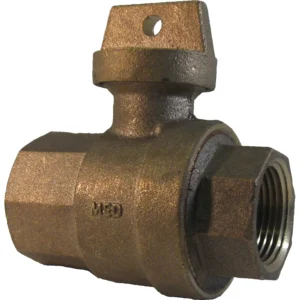
Many searches involve sizing, such as:
1″ curb stop
1 inch curb stop valve
1″ curb stop valve with drain
Used for:
✔ High-flow residential lines
✔ Small commercial buildings
7. Underground Stop-and-Waste Valve

A variation with a drain port.
Used for:
✔ Irrigation blowout
✔ Frost protection
Comparison Table: Underground Shut-Off Valve Types
| Valve Type | Best Use | Has Drain? | Typical Material | Sizes | Notes |
|---|---|---|---|---|---|
| Curb Stop Valve | Residential/commercial water supply | No/Yes | Brass, Bronze, Polymer | ½”–2″ | Most common |
| Curb Stop w/ Drain | Seasonal/winterizing lines | Yes | Brass/Bronze | ¾”–1″ | Also called stop-and-waste |
| Angle Curb Stop | Tight spaces & meter installations | No | Brass/Bronze | ½”–1″ | 90° angle |
| Straight Curb Stop | Standard installations | No | Brass/Bronze | ½”–2″ | Simple inline design |
| Ball Curb Stop | High reliability & longevity | No | Brass/Poly | ¾”–1″ | Quarter-turn |
| Underground Stop-and-Waste Valve | Irrigation blowout & frost protection | Yes | Brass | ½”–1″ | Ensures drainage |
Where Underground Shut-Off Valves Are Located
Usually found in a:
Curb box (metal or plastic tube)
Underground utility box
Meter pit
Yard service line
Average depth:
24 to 60 inches depending on frost line.
How to Locate an Underground Water Shut-Off Valve
Look for a metal or plastic round cover labeled “WATER,” “CURB,” “METER,” or “W”.
Check near street/sidewalk.
Follow water service line direction from the house.
Use a metal detector if buried.
Contact the local water utility for a map.
How a Curb Stop Valve Works (Simple Explanation)
It uses a quarter-turn ball or plug to open or shut off the flow. A long rod inside the curb box transfers the rotation from the curb key.
Open: Handle slot parallel to pipe
Closed: Slot perpendicular
How to Install an Underground Water Shut-Off Valve (Step-by-Step)
Tools & Materials
Curb stop valve (correct size)
Pipe cutter
PE/PEX/copper fittings
Gravel bedding
Curb box
Tamping tool
Pipe wrench
Curb key
Step 1 — Locate the Installation Point
Near property line or service tee.
Step 2 — Excavate the Area
Dig a hole at least:
24–36 inches wide
Deep enough to stay below frost line
Add gravel for drainage.
Step 3 — Prepare Service Line
Cut and clean the pipe (PE, PEX, Copper, HDPE).
Step 4 — Install the Curb Stop Valve
Use correct connection type:
Compression
Flare
MIP
Pack joint
Ensure the valve’s operating rod aligns vertically.
Step 5 — Install the Curb Box
Place over the valve so the keyway aligns.
Step 6 — Backfill Properly
Use sand or fine soil first
Tamp lightly
Do not twist the box
Step 7 — Test the Valve
Use a curb key:
Quarter-turn to open
Quarter-turn to close
Check for leaks.
Replacing an Underground Shut-Off Valve
Steps:
Shut off water from municipal main (if required)
Excavation
Remove old valve
Install new curb stop
Replace curb box
Pressure test
Underground Water Shut-Off Valve With Drain: When to Use It
Use for systems where you need to drain the line when closed, such as:
Irrigation systems
Seasonal cabins
Outdoor barns
Frost-prone regions
Curb Stop Valve vs Main Water Shut-Off Valve (Comparison Table)
| Feature | Curb Stop Valve | Indoor Main Shut-Off |
|---|---|---|
| Location | Underground | Basement / indoors |
| Access | Curb key | Hand-operated |
| Owner | Shared / utility | Property owner |
| Function | Isolate property from main | Shut off inside water |
| Freeze protection | Yes | No |
How to Choose the Right Underground Shut-Off Valve
Consider:
Material (Brass/Bronze = durable, Polymer = corrosion-proof)
Connection type
Presence of drain port
Local climate
Pipe material
When evaluating underground water shut off valve types, always consider your local frost line depth and pipe material (Copper, PE, or PEX).
Q: What are the main underground water shut off valve types? A: The primary underground water shut off valve types include Curb Stop Valves (Straight and Angle), Ball Curb Stops, and Stop-and-Waste Valves. Curb stops are standard for isolation, while stop-and-waste valves are used in cold climates to allow for line drainage.
Summary
Underground water shut-off valves—especially curb stop valves—are essential for safely controlling water flow to residential and commercial properties. Proper selection, installation, and maintenance ensure long-term reliability.
Need Curb Stop Valves for Your Project?
We supply:
Brass & Bronze Curb Stop Valves
With or Without Drain
½” to 2″ Sizes
PE / PEX / Copper Compatible
For residential, commercial, and municipal applications
Contact us for bulk pricing, OEM, and fast shipping.