The Red Sentinel Outside Your Building
If you have ever walked past a commercial building or a large warehouse, you’ve likely seen a bright red, waist-high iron post standing in the landscape. While it might look like a simple piece of plumbing, it is actually one of the most critical components of a fire protection system: the Post Indicator Valve (PIV).
But what does a post indicator valve do, and why is it located outside instead of inside? This guide breaks down everything you need to know about the PIV valve.
I. What is a Post Indicator Valve (PIV)?
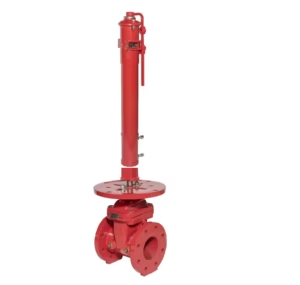
At its simplest, a Post Indicator Valve (PIV) is a specialized valve assembly used to control the water supply to a building’s fire sprinkler or standpipe system.
It consists of two main parts:
The Valve: A gate valve buried underground in the main water line.
The Post: A vertical housing that extends above ground, providing a manual way to open or close the buried valve and a visual window to show its status.
A PIV valve is an isolation valve for fire service mains that provides a permanent visual indication of whether the valve is in the OPEN or SHUT position.
II. What Does a Post Indicator Valve Do?
The primary function of a PIV is isolation. In the event of a fire, a broken pipe, or routine maintenance, fire departments or facility managers need to control the flow of water into the building.
The PIV serves three critical roles:
Manual Control: It allows someone to shut off or turn on the massive volume of water needed for fire sprinklers without needing special underground tools.
Instant Verification: Through a small glass window on the post, you can see a sign that says either “OPEN” or “SHUT”. This is vital for fire inspectors to ensure the water supply hasn’t been accidentally turned off.
Protection: The heavy iron casing protects the valve stem from environmental damage and vehicle impact.
III. Why is a PIV Located Outside?
One of the most common questions is: “What is a common location for a post indicator valve?” Under NFPA 24 standards, PIVs are almost always located outside the building, typically about 40 feet (12 meters) away.
Accessibility: If a fire breaks out and the building becomes inaccessible or collapses, the fire department can still reach the PIV to control the water supply.
Safety: It ensures that firefighters don’t have to enter a burning structure just to turn on the sprinklers.
IV. How to Read a PIV: Open or Closed?
Understanding the post indicator valve open or closed status is a basic requirement for facility safety.
OPEN (Green or White text): This means water is free to flow into the fire protection system. In normal conditions, a PIV should always be locked in the OPEN position.
SHUT (Red or White text): This means the water supply is cut off. The sprinklers will not work if the valve is in this position.

V. Different Types of Indicator Posts
While the vertical post is the most common, there are other versions based on the building’s architecture:
Vertical Indicator Post: The standard type that stands in the ground.
Wall Indicator Post: Used when the valve is located inside a wall; the indicator and handle extend horizontally through the exterior wall.
Underground / Road Box Type: Used in areas where a standing post would be an obstruction (like a roadway), requiring a specialized key to operate.
VI. Summary: Why Your Building Needs a PIV
The post indicator valve assembly is the “master switch” of your fire defense. Without it, verifying the readiness of your sprinkler system would require digging or specialized sensors. By providing a clear, manual, and visual interface, the PIV ensures that when a fire strikes, the water is ready to flow.
Understanding the critical role of a Post Indicator Valve is only the first step; ensuring your fire protection system is equipped with high-quality, compliant hardware is what saves lives and property. At tot valve, we specialize in providing UL Listed and FM Approved PIV assemblies designed to withstand the harshest environments. Whether you are designing a new fire main or replacing an existing system, our engineering team is ready to provide the CAD drawings, submittal packages, and technical support you need to ensure full NFPA compliance. Don’t leave your fire safety to chance—contact us today for a technical consultation or a competitive bulk quote.