Not all gate valves are created equal. Depending on the pressure, temperature, and fluid type, selecting the wrong type of gate valve can lead to leakage, “thermal binding,” or system failure. To make an informed decision, you must understand the gate valve description beyond just the size and material.

In this guide, we compare the most common gate valve types based on their two most important mechanical features: Stem Motion and Wedge Design.
I. Classification by Stem Motion
The stem is the linkage that moves the gate. Its design determines the valve’s footprint and how easily its status can be monitored.
1. Rising Stem Gate Valve (OS&Y)

In this design (Outside Screw and Yoke), the stem rises as the valve opens.
Gate Valve Used For: Industrial plants and refineries where it is critical to see at a glance if the valve is OPEN or CLOSED.
Pros: Threading is located outside the fluid path, preventing corrosion.
2. Non-Rising Stem Gate Valve (NRS)
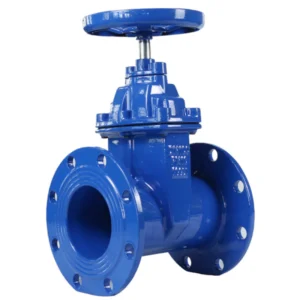
The stem rotates but does not move upward; the wedge climbs the stem internally.
Gate Valve Used For: Underground water systems and Post Indicator Valve (PIV) assemblies.
Pros: Compact design; ideal for buried applications or space-constrained areas.
II. The Battle of the Wedges: Finding the Perfect Seal
The wedge is the heart of the gate valve anatomy. Choosing the right gate valve wedge types ensures a “bubble-tight” shut-off and prevents the valve from getting stuck.
1. Resilient Wedge Gate Valve (The Modern Water Standard)
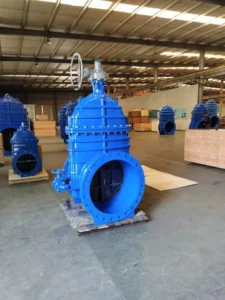
This is the standard for modern waterworks and fire protection. The wedge is fully encapsulated in a high-grade elastomer (EPDM or NBR).
Key Advantage: The rubber compresses to form a perfect seal even if sand or scale is present in the line.
Application: Potable water and wastewater.
2. Flexible Wedge Gate Valve

A metal wedge with a cut around the perimeter, allowing the seating faces to flex slightly.
Why it’s popular: It compensates for pipe stress and prevents the wedge from getting stuck due to thermal expansion in high-heat services.
3. Split Wedge / Parallel Disc Gate Valve (The High-Performance Solution)
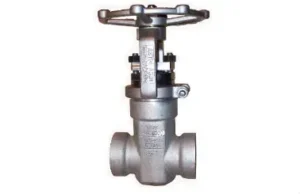
In this design, the gate is composed of two independent discs that are forced against the seats by a spreader mechanism.
Best Usage: High-pressure steam, gases, and volatile fluids.
Key Advantage: * No Thermal Binding: Because the discs are independent, they won’t get “stuck” when the pipe expands due to heat.
Dual Sealing: It can provide a seal on both the upstream and downstream sides simultaneously.
Application: Power plants and critical refinery isolation points.
4. Solid Wedge Gate Valve

The simplest and strongest design. A single piece of solid metal.
Best Usage: General-purpose industrial applications with stable temperatures.
III. Application-Based Selection Matrix
Choosing between these different types of gate valves depends on your specific gate valve usage:
| Application | Recommended Gate Valve Type | Wedge/Seat Type |
| Municipal Water | Non-Rising Stem (NRS) | Resilient Wedge |
| Fire Protection (PIV) | NRS with Indicator Post | Resilient Wedge (UL/FM) |
| High-Temp Steam | Rising Stem (OS&Y) | Split Wedge / Parallel Disc |
| Standard Oil & Gas | API 600 Rising Stem | Flexible Wedge |
IV. Professional Selection Advice: 3 Key Factors
When reviewing a gate valve description for your project, consider these factors:
Medium Purity: If the water contains sediment, use a Resilient Wedge. Rubber “absorbs” particles during sealing, whereas particles scratch metal seats.
Thermal Expansion: For steam or processes with rapid temperature changes, avoid Solid Wedges. Use a Flexible Wedge or Parallel Disc to prevent the gate from seizing.
Space: If you are installing a valve in a pit or tight corridor, the Non-Rising Stem (NRS) is mandatory.
Conclusion
A gate valve is the workhorse of the piping world, but its performance depends entirely on its internal configuration. Whether you need a compact NRS valve for a municipal project or a robust Split Wedge valve for high-pressure steam, understanding these types of gate valves ensures system safety.