Choosing the right voltage for your automated ball valve is one of the most critical decisions in your plumbing or irrigation project. Whether you are looking at a 3/4 ball valve for a smart home or an industrial system, the choice between 12V DC and 110V AC impacts safety, installation cost, and performance.
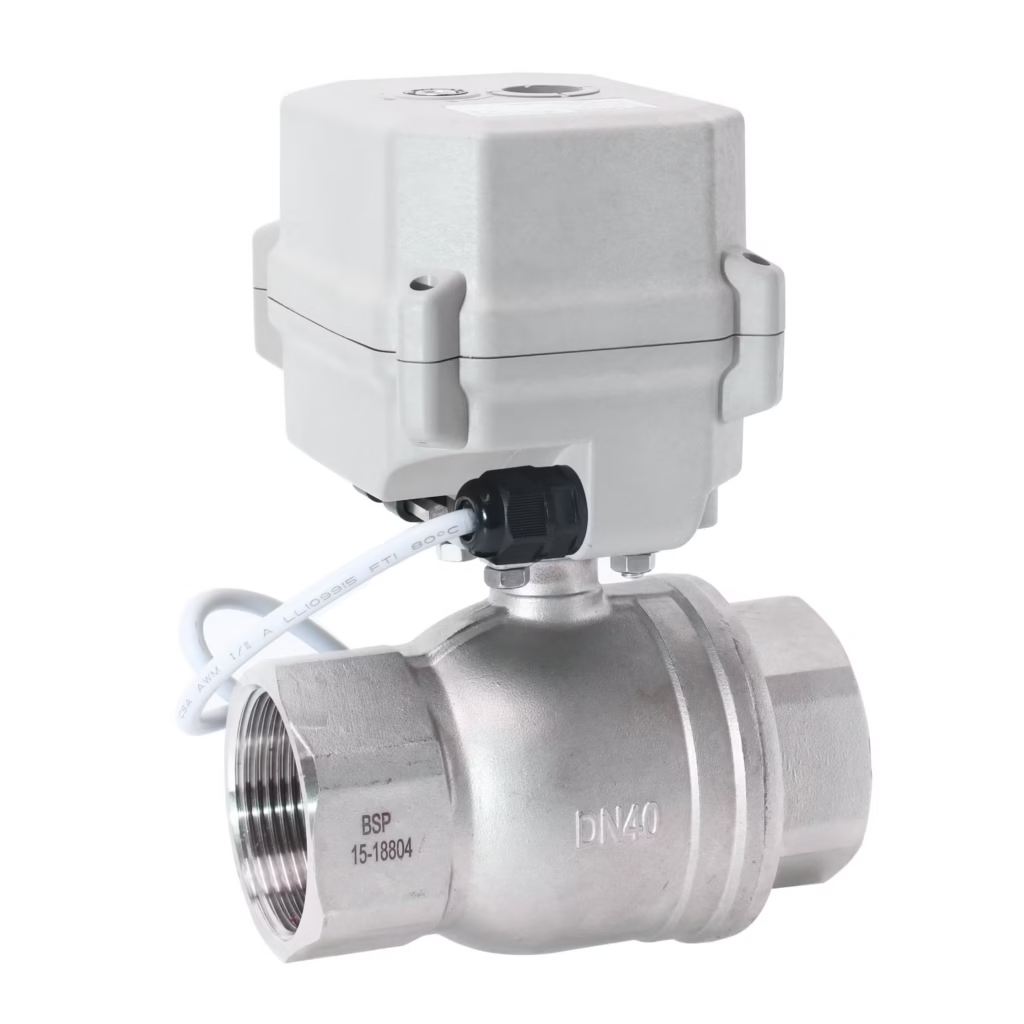
In this guide, we’ll break down the pros and cons of each to help you make the “solid” choice.
1. The 12V DC Motorized Ball Valve: Safety & Portability
The 12V motorized ball valve is a top choice for mobile and low-voltage environments. It is highly popular among DIYers and off-grid professionals.
Key Advantage: Safety. 12V DC is low voltage, which significantly reduces the risk of electric shock. This is crucial if your 3/4 inch ball valve is installed in wet areas or outdoors where cables might be exposed.
Off-Grid Compatibility: If you are working on a boat, an RV, or a solar-powered irrigation system, a 12 volt ball valve connects directly to battery systems without needing an inverter.
Best For:
Solar-powered gardening and irrigation.
RV and Marine plumbing.
Battery-backed smart water valve systems.
2. The 110V/120V AC Motorized Ball Valve: Power & Convenience
For residential and commercial buildings, the motorized ball valve 110V (or 120V) is often the standard.
Key Advantage: Plug-and-Play. You can wire these valves directly into your building’s electrical grid. There’s no need for separate power adapters or transformers, which simplifies the installation of an electric ball valve.
Consistent Torque: AC-powered actuators often provide very stable torque, making them ideal for 3 4 ball valve threaded systems that might encounter high mineral buildup or require frequent cycling.
Best For:
Home HVAC and radiant heating systems.
Commercial water shut-off for leak prevention.
Indoor smart valves for water management.
At-A-Glance Comparison Table
| Feature | 12V DC Ball Valve | 110V/120V AC Ball Valve |
| Safety | High (Low Voltage) | Standard (Requires proper grounding) |
| Power Source | Batteries, Solar, Adapters | Standard Wall Outlets / Grid |
| Ideal Location | Outdoors, Wet areas, RVs | Indoors, Commercial buildings |
| Installation | Requires DC power supply | Direct wiring to AC mains |
| Common Sizes | 3/4 ball valve, 1/2″, 1″ | 3/4 ball valve, 1″, 2″ |
3. The “Fail-Safe” Factor: Automatic Ball Valves
Regardless of the voltage you choose, you should consider the automatic ball valve with a “Power-Off Return” function.
Whether it’s a 12v electric ball valve or a 110V model, our solid valves feature internal energy storage (capacitors) that automatically closes the valve during a power failure. This prevents the primary risk associated with automated ball valves: being stuck “Open” when you need them to shut off the most.
4. The Smart Evolution: WiFi Ball Valves
Modern technology has combined these voltages with WiFi. Now, you can find a wifi motorized ball valve in both 12V and 110V versions. By using a smart water valve controller, you can manage your 3/4″ brass ball valve or stainless steel valve from your phone, regardless of the underlying voltage.
Why Choose Our Stainless Steel Smart Valves?
While many search for a 3/4 brass ball valve, we recommend Stainless Steel for its superior corrosion resistance and lead-free safety, especially when used as a smart valve for water.
Conclusion: Which should you buy?
Choose the motorized ball valve 12v if your project is outdoors, solar-powered, or in a mobile environment like an RV.
Choose the motorized ball valve 110v if you are installing it in a home or building with easy access to standard power outlets.
Ready to upgrade your system?
Explore our full range of 3/4 ball valves, available in both 12V and 110V versions with integrated WiFi and Auto-Return features.
👉 [View our 3/4″ Smart WiFi Motorized Ball Valve Product Page here]