Installing a new refrigerator with an ice maker or a water dispenser is an exciting kitchen upgrade. However, the reliability of that water connection depends entirely on one small component: the refrigerator water line shut off valve.

Whether you are performing a first-time installation or need to find the water valve behind the refrigerator to stop a sudden leak, understanding your valve options is critical for protecting your home from water damage.
1. Locating Your Fridge Water Valve
In an emergency, every second counts. If your fridge is leaking, you need to find the water shut off valve for the refrigerator immediately. It is typically found in one of three places:
Behind the Refrigerator: Often a recessed “ice maker box” in the wall.
Under the Kitchen Sink: Tapped into the cold water supply line.
Basement or Crawl Space: Located directly beneath the kitchen floor.
2. Technical Specifications: 1/4″ vs. 3/8″
When shopping for a water line valve for a fridge, the most important factor is the size of the connection.
1/4 Inch OD: This is the standard size for almost all ice maker shut off valves. Most plastic or copper refrigerator tubing uses this size.
3/8 Inch Compression: This is the standard size for the cold water supply line under your sink.
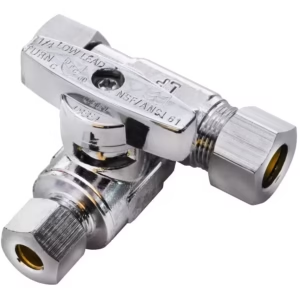
The Solution: Most modern setups use a 3/8″ x 3/8″ x 1/4″ Tee Stop Valve, which allows you to split the sink’s water supply to feed the refrigerator.
3. The Better Alternative: Tee Stop Valve vs. Saddle Valve
Many older homes use a water saddle valve (a piercing valve) to tap into water lines. While easy to install, saddle valves are notorious for leaking and clogging over time.
Why You Should Upgrade to a Tee Stop Valve:
If you are looking to replace a saddle valve with something better, a Tee Stop Valve is the professional choice.
Leak Protection: Unlike a water line saddle valve, a Tee valve is a solid brass fitting that requires cutting the pipe or threading onto an existing valve, creating a permanent, watertight seal.
Higher Flow: It provides a full-bore flow, ensuring your ice maker fills quickly and your water dispenser has strong pressure.
Reliability: A dedicated tee shut off valve won’t clog with mineral deposits like a tiny piercing needle will.
4. How to Install a Refrigerator Water Line Valve (Tee Style)
If you are DIY-ing your refrigerator water supply valve, follow these professional steps:
Turn Off Water: Shut off the main water supply to the house or the cold water valve under the sink.
Disconnect the Line: Unscrew the existing 3/8″ riser (the pipe going to the faucet).
Install the Tee Valve: Screw your new 3/8″ water line splitter with shut off valve onto the supply shank.
Connect the Fridge Line: Attach your 1/4 inch ice maker line to the small outlet on the Tee valve.
Test for Leaks: Turn the water back on and check all connections. Ensure the refrigerator shut off valve is easy to reach in case of future needs.
5. Maintenance Tip: Is Your Valve Stuck?
Over years of disuse, a water line valve for a refrigerator can become seized by calcium deposits. If you cannot turn the handle by hand, do not force it with pliers—you may snap the stem. It is safer to perform a refrigerator water line valve replacement than to risk a burst pipe.
Conclusion
A high-quality refrigerator water line shut off valve provides peace of mind. By avoiding the pitfalls of the saddle tap valve and opting for a professional Tee Stop Valve, you ensure years of leak-free service for your ice maker and water dispenser.