In the world of process control, precision throttling is not always the goal. In many critical scenarios, speed is the priority. Whether it is shutting down a line during an emergency or flushing out sediment in a high-pressure system, the Quick Opening Valve (90) is engineered to deliver maximum flow in the shortest possible stroke.

This guide explores the unique flow curves of quick-opening designs, their internal mechanics, and why they are the “gold standard” for boiler systems and safety shut-off applications.
1. What are Quick Opening Flow Characteristics?
(Which is a Quick Opening Valve?)
The term “Quick Opening” refers to one of the three fundamental inherent flow characteristics (alongside Linear and Equal Percentage).
The Principle: In a quick-opening design, the flow rate increases rapidly during the initial stages of the valve stroke.
The Curve (Valve Opening vs. Flow Rate): Typically, the valve reaches approximately 80% of its total flow capacity within the first 20% to 30% of its travel. On a graph, this curve shows a steep, nearly vertical ascent that flattens out as the valve approaches the fully open position.
2. Common Designs of Quick Opening Valves
While many linear motion valves can be fitted with quick-opening trims, two specific hardware configurations dominate the industry:
A. Quick Opening Gate Valve
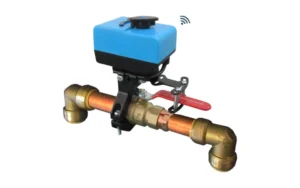
Standard gate valves require multiple turns of a handwheel to open. However, a quick opening gate valve (30) utilizes a lever-operated mechanism.
Feature: This “pull-handle” design allows an operator to move the gate from fully closed to fully open in a single, split-second motion.
Application: Ideal for low-pressure lines where immediate flow or isolation is required without the need for throttling.
B. Boiler Blow-off Valves
This is perhaps the most demanding application for a quick-opening design.
Function: Blow off valves in a boiler (140) must purge sludge, scale, and sediment from the bottom of the boiler drum. This requires a sudden, high-velocity blast of water.
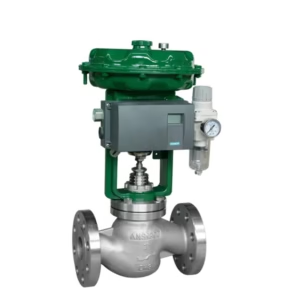
Design: These are often specialized high pressure globe valves (40) or angle valves with reinforced internals (70) designed to withstand the massive erosive forces of flash steam and debris.
3. Quick Opening vs. Equal Percentage: When to Choose?
Choosing between a quick-opening characteristic and an equal percentage valve (140) depends entirely on your control logic:
On/Off Isolation: If the valve’s only job is to be 100% open or 100% closed, a quick-opening valve is superior. It reduces the time the plug spends in the “near-seated” position, minimizing wire-drawing and erosion.
Emergency Bypass: When a primary line fails, a quick-opening bypass valve ensures that system pressure is maintained without lag.
Why it Fails at Throttling: Never use a quick-opening valve for precise flow control. Because a tiny change in stem position results in a massive change in flow, the system will suffer from “hunting” (oscillating wildly around the setpoint).
4. Technical Selection & Rangeability
When evaluating a globe valve cv table (20) or a control valve size chart (30) for quick-opening applications, keep these factors in mind:
Low Rangeability: Quick-opening valves have lower rangeability (20) compared to equal percentage valves. They are not meant to control flow over a wide range of values.
Water Hammer: Because these valves move so fast, they can cause a sudden pressure spike known as “Water Hammer.” For high pressure globe valve (30) installations, ensure the piping is sufficiently anchored.
5. Maintenance and Serviceability
Because these valves operate in “high-shock” environments (fast movement and high velocity), the globe valve internals (70) require regular inspection.
Erosion Check: Inspect the seat and plug for “pitting” caused by high-velocity debris.
Packing Tension: The fast travel of a linear motion valve can wear out traditional packing quickly. Ensure you use high-quality, lubricated packing to prevent stem leaks.