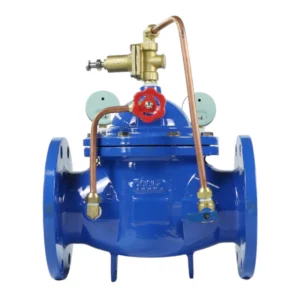
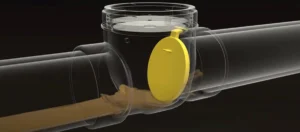
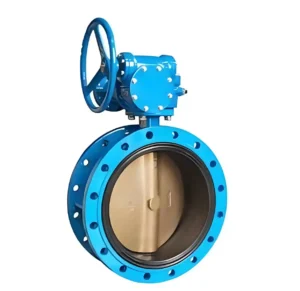
In large-diameter piping systems (DN50–1200mm), engineers often face a dilemma: choose a Ball Valve for superior sealing but deal with immense weight and cost, or choose a Butterfly Valve for its compact size but sacrifice reverse-pressure sealing reliability. The Bidirectional Hard-Seated Rotary Ball Valve (also known as the Orbiting Ball Valve) bridges this gap, offering a hybrid solution for harsh industrial environments.

1. How It Works: The Forced Sealing Mechanism
The rotary ball valve utilizes a sophisticated forced sealing structure that adapts to the direction of flow:
Forward Pressure Sealing: Media pressure pushes the valve disc forward. The sealing surface engages the seat, and the seat is pressed firmly against the valve body step, ensuring a tight seal.
Reverse Pressure Sealing: Unlike standard valves, reverse pressure pushes the disc and the seat backward simultaneously. The seat sealing surface remains in tight contact with the disc, maintaining integrity even under high backpressure.
Anti-Backflow Protection: This unique design makes it ideal for pump outlets. It effectively prevents medium backflow when reverse pressure exceeds forward pressure.
2. Advanced Design Features
Zero-Friction Opening and Closing
One of the most significant innovations is the frictionless operation. The valve core is designed to expand and retract slightly during operation. This ensures that the sealing surfaces only touch at the moment of final closure, eliminating the sliding friction that destroys seals in conventional valves.
Advanced Material Engineering
The sealing surfaces utilize Gradient Functional Materials. By employing processes like supersonic plasma spraying or vacuum cladding, the seals can be reinforced with Hard Alloy or Stainless Steel. This results in:
Wear Compensation: The seat naturally adjusts to compensate for minor wear over time.
Self-Alignment: The mechanism ensures perfect centering during every cycle.
3. Technical Comparison: Why It Outperforms Standard Valves
| Feature | Rotary Ball Valve | Standard Ball Valve | Butterfly Valve |
| Sealing Principle | Bidirectional Forced Seal | Mostly Unidirectional | Unidirectional/Weak Reverse |
| Anti-Backflow | Integrated Function | None (requires special design) | Poor/None |
| Structure | Compact & Lightweight | Heavy in large diameters | Light & Simple |
| Media Handling | Slurries, Fibers, Particles | Clean Media Preferred | Clean Media Preferred |
| Friction | Zero Friction during travel | High Friction | Constant Friction |
| Maintenance | Low (Self-compensating) | High (Requires disassembly) | Moderate (Seat replacement) |
4. Key Innovations and Patents
Structural Hybridization: The first design to successfully combine ball valve sealing performance with the lightweight footprint of a butterfly valve.
Dual-Stage Sealing: Utilizes a “Front-end + Forced” composite sealing mechanism to handle high-pressure fluctuations.
Adaptive Mechanism: Built-in intelligence for automatic centering and sealing pressure adjustment based on flow conditions.
5. Maintenance Guide: Ensuring Long-Term Reliability
To maintain the bidirectional hard-seated rotary ball valve, follow these industrial best practices:
Seal Leakage: If leakage occurs, check for debris. The self-cleaning action handles most particles, but heavy buildup should be flushed.
Operation Stiffness: If the valve becomes difficult to turn, lubricate the stem and check for scale inside the body.
Long-Term Storage: For valves out of service for long periods, apply protective grease to the sealing surfaces to prevent oxidation.
Conclusion
The Bidirectional Hard-Seated Rotary Ball Valve is more than just a valve; it is a system-level optimization tool. By providing ball-valve-level sealing in a butterfly-valve-sized package, it reduces infrastructure costs while increasing safety against backflow and wear.