In the world of performance tuning, the ability to control your exhaust volume is no longer a luxury—it’s a requirement. However, as you shop for an exhaust valve control kit, you will encounter two distinct technologies: Vacuum-Actuated and Electronic-Driven.
While both serve the same purpose, the engineering behind them is vastly different. In this technical deep dive, we compare the response times, installation complexity, and precision of these two exhaust silencer valve systems to help you decide which belongs on your build.
1. The Vacuum-Actuated Valve: The Traditional Method
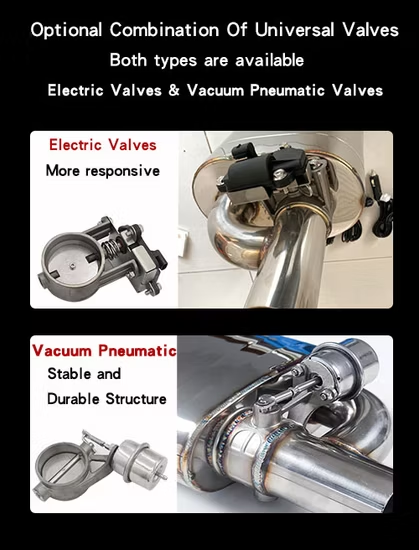
Vacuum valves rely on a rubber diaphragm and engine vacuum (or an external vacuum pump) to pull the valve open or closed.
The Pro: They are highly resistant to heat because there are no sensitive electronics mounted directly on the exhaust pipe.
The Con: Installation is labor-intensive. you must tap into the engine’s intake manifold and run several feet of vacuum tubing from the engine bay to the rear of the car.
Best For: Classic naturally aspirated engines or track-only cars with high heat output.
2. The Electronic Exhaust Valve: The Modern Standard
An electronic exhaust valve control system uses a high-torque electric motor (actuator) mounted directly to the valve body.
Why Electronic is Taking Over:
Instant Response: There is no “pressure build-up” time. The moment you click the remote, the gear-driven motor snaps the valve open.
Simplified Installation: No vacuum hoses, no T-junctions, and no risk of vacuum leaks. You only need a 12V power source.
Precision Engineering: Electronic motors allow for infinite adjustability. While vacuum valves are usually binary (Open/Closed), an electronic kit can hold the valve at 25%, 50%, or 75% open to fine-tune the exhaust frequency and eliminate drone.
3. Comparing Control Systems: How Do You Trigger the Sound?
The sophistication of an exhaust valve control kit is measured by how the driver interacts with it. Modern systems offer three levels of control:
A. Standalone Remote Control
The most popular DIY option. A wireless key fob sends a signal to the control module. It’s simple, reliable, and requires zero integration with the car’s computer.
B. Smartphone & Bluetooth Integration
Many premium electronic exhaust control units now pair with your phone via Bluetooth. This allows you to:
Pre-set “Quiet Hours” for neighborhood driving.
Monitor valve status in real-time.
Customize the “Open” percentage for the perfect tone.
C. CAN-Bus / Driving Mode Integration
For high-end builds, the valve can be integrated into the car’s CAN-Bus system. This allows the valve to automatically open when you switch the car to “Sport Mode” or when the RPM exceeds a certain threshold (e.g., 3500 RPM).
4. Durability Challenges: Heat and Environment
One common concern with an exhaust silencer valve is the harsh environment under the car.
Heat Shielding: Because the motor is electronic, look for kits that include a thermal isolation spacer between the valve body and the actuator. This prevents heat transfer from the exhaust gases to the electronics.
Corrosion Resistance: Ensure the actuator housing is sealed (IP67 or higher) to prevent failure from road salt, water, and grime.
5. Technical Verdict: Which Should You Buy?
Choose a Vacuum Valve if: You have a classic car with plenty of vacuum ports and want a “period-correct” mechanical feel.
Choose an Electronic Valve if: You drive a modern turbocharged car (where vacuum is hard to find), want a 30-minute installation, or require precise smartphone control over your exhaust note.