When designing a landscape or a professional irrigation system, the valves are the heart of the operation. However, the underground valve box is the “armor” that protects that heart. Without the right enclosure, your valves are vulnerable to soil shifting, freezing temperatures, and damage from lawnmowers or vehicles.
In this guide, we will break down the types of irrigation boxes, material standards, and critical installation tips to ensure your system remains accessible and protected for years.
1. Why the “Box” Matters as Much as the Valve
An irrigation valve box provides a clean, dry, and accessible space for your sprinkler valves.
Accessibility: It allows for quick repairs without excavating your entire lawn.
Protection: It prevents dirt from clogging solenoids and protects wires from rodents.
Safety: It prevents “trip hazards” by flush-mounting the hardware into the turf.
2. Choosing the Right Size: Sprinkler Box vs. Main Valve Box
Not all valve boxes are created equal. You must match the box size to the number of valves it will house:
Circular 6″ – 10″ Boxes: Perfect for a single sprinkler valve or a manual shut-off point.
Rectangular Standard (12″) Boxes: The industry standard for housing a manifold of 2 to 4 valves.
Jumbo/Super Jumbo Boxes: Used for large commercial irrigation manifolds or for housing bulky components like backflow preventers and water meters.
3. Material and Load Ratings: Turf vs. Driveway
This is the most critical part of your selection. Choosing the wrong underground valve box can lead to collapsed lids and costly accidents.
| Application Area | Recommended Load Rating | Material Type |
| Residential Lawns | Pedestrian/Light Duty | High-density polyethylene (HDPE) with a green lid to blend with grass. |
| Driveways/SideWalks | Medium Duty (Class B) | Reinforced plastic or polymer concrete. Lids are often bolted down for safety. |
| Roadways/Parking Lots | Heavy Duty (Traffic Rated) | Cast iron or high-impact polymer concrete designed to withstand thousands of pounds of pressure. |
4. Installation: How Deep Should a Valve Box Be Buried?
One of the most frequent questions we receive is: “How deep should my irrigation box in ground be?”
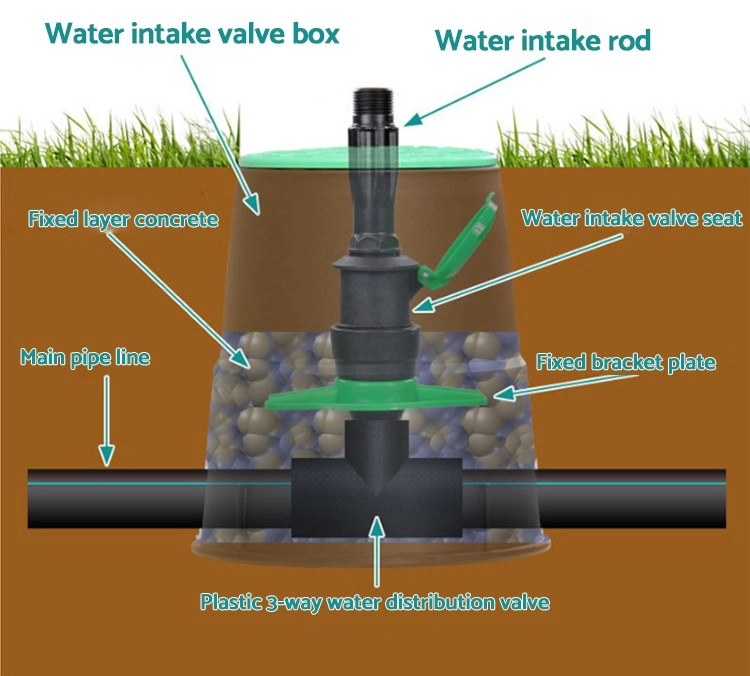
The 2-Inch Rule: The top of the sprinkler system valve box should be exactly flush with the final grade of the soil or ½ inch above it. If it’s too high, your lawnmower will destroy the lid. If it’s too low, dirt and grass will eventually bury it.
The Base Layer: Never place a box directly on dirt. Dig 6 inches deeper than the box and fill the bottom with crushed stone or pea gravel. This provides drainage and prevents the box from sinking over time.
5. Key Features to Look For
When shopping for irrigation boxes for sale, look for these professional-grade features:
Anti-Settling Flanges: Extra “wings” at the bottom of the box that keep it from sinking into soft soil.
Bolt-Down Lids: Essential for high-traffic areas or to prevent children/pets from opening the box.
Pipe Knockouts: Pre-cut sections that allow you to easily slide the box over existing pipes without cutting the plastic.
6. Maintenance Tip: Preventing “Lost” Boxes
Over several years, grass can grow over a sprinkler box, making it impossible to find.
Pro Tip: Place a small piece of metal (like a large nail) inside the box. If it gets covered, you can find it easily with a metal detector.