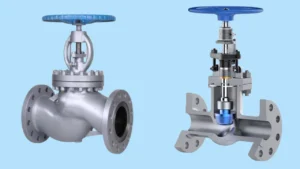
Of all the types of water valves, the isolation valve is the simplest yet most crucial. These valves are designed to fully open or close the flow, providing necessary safety and isolation for maintenance. The two most common types you will encounter in both home and industrial plumbing are the Ball Valve and the Gate Valve.

Choosing the correct isolation valve—especially for your home’s main water shut off valve—is a critical decision. This article provides a detailed comparison of these two common water shut off valves and guides you toward the best choice for your system.
I. Core Comparison: Design and Operation
While both Ball Valves and Gate Valves function as isolation valves, their structural and operational differences dictate their suitability, reliability, and application scenarios.
| Feature | Ball Valve | Gate Valve |
| Isolation Mechanism | A revolving spherical ball with a hole through the center. | A flat gate or wedge that moves perpendicular to the flow. |
| Operation Type | Quarter-Turn (90° rotation). | Multi-Turn (requires multiple rotations of the handwheel). |
| Speed | Extremely Fast (instant shut-off). | Slow (requires time to fully raise or lower the gate). |
| Throttling | Not Suitable. Throttling damages the ball seat seals. | Not Suitable. Throttling causes erosion and seal damage on the gate. |
| Sealing Reliability | Excellent. Seals tightly around the ball bore. | Fair. Relies on the gate making clean contact with the seat; susceptible to mineral buildup. |
| Cost | Typically more cost-effective in modern systems. | Often higher cost due to more complex body design. |
Ball Valve Mechanism: Fast and Reliable
The Ball Valve is the modern favorite due to its simple quarter-turn operation.
When the handle is parallel to the pipe, the valve is fully ON (water flows through the central hole).
When the handle is perpendicular to the pipe, the valve is fully OFF.
This design makes the water valve on or off status very quick to determine and the shut-off action highly reliable.
Gate Valve Mechanism: Vertical Cut-Off
The Gate Valve uses a metal wedge or gate that is raised or lowered by rotating the handwheel multiple times.
When the gate is fully raised, it provides an unobstructed flow path (Full Port), resulting in minimal pressure drop.
The Challenge: After years of disuse, mineral deposits can accumulate around the gate and seat, preventing the gate from fully seating, which often leads to leaks when the valve is finally operated.
II. Application and Recommended Selection
1. Main Water Line Isolation (Main Water Shut Off Valve Types)
This is the most critical valve in your home, requiring speed and absolute reliability during emergencies.
🏆 Recommendation: Ball Valve
Reasoning: Its instantaneous shut-off capability, high reliability even after long periods of inactivity, and superior sealing make the Ball Valve the undisputed best choice for the main water shut off valve types in modern homes.
2. Branch Line Isolation (Water Pipe Valves Types)
For branch lines isolating fixtures like water heaters or washing machines, both can be used.
Ball Valve: Recommended for any branch that might require periodic or quick isolation.
Gate Valve: Only suitable for lines where isolation is extremely rare and low pressure drop is paramount. However, most contemporary plumbing utilizes Ball Valves for consistency and reliability.
III. Maintenance and Troubleshooting
Failure: Inability to Close Fully (Constant Drip)
Gate Valve: Failure is usually due to mineral buildup between the gate and the seat. You can try cycling the valve (opening and closing it slightly—with caution) to flush out debris. If unsuccessful, the entire Gate Valve must be replaced.
Ball Valve: Leaking is typically caused by worn PTFE or rubber seats around the ball. Since Ball Valves are generally designed to be non-repairable, the low cost usually warrants replacing the entire unit.
How to Identify Valve Status (Water Valve On or Off)?
Ball Valve: Intuitive. Handle is parallel to the pipe for ON; handle is perpendicular to the pipe for OFF.
Gate Valve: Requires observing the stem. If the stem is raised (non-rising stem models are less obvious), the valve is ON.