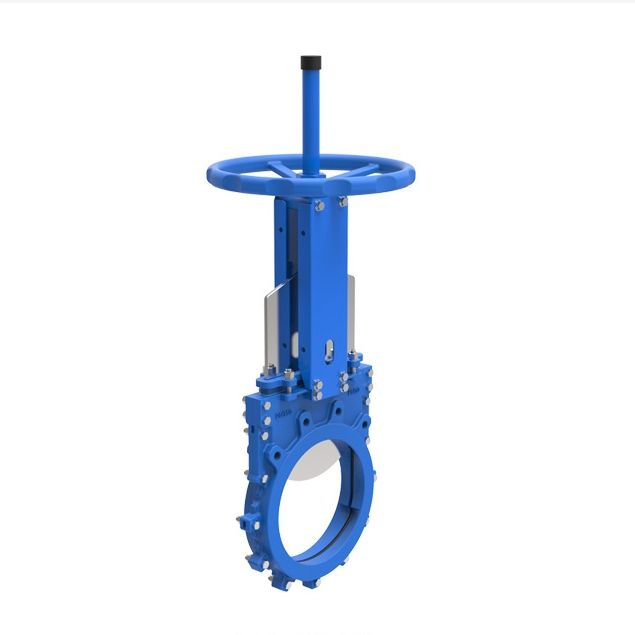
Bi-Directional Knife Gate Valve

The Bi-Directional Knife Gate Valve is engineered to provide reliable shutoff in both flow directions. Its advanced sealing system ensures bubble-tight performance, making it highly effective in handling liquids, slurries, and solids-laden media. Unlike uni-directional valves, this design eliminates the risk of incorrect installation or flow reversal, providing greater flexibility and operational safety in demanding industrial applications.

Manual Bi-directional Ceramic Knife Gate Valve
High-Pressure Bi-Directional Knife Gate Valve
Quick-Change Seat Design Electric Throttling/Regulating Knife Gate Valve
V-Port Bi-Directional Rising Stem Knife Gate Valve
Manual Handwheel Split-type PU Lined Knife Gate Valve
Manual Handwheel Ductile Iron Bi-Directional Split-type Knife Gate Valve
Electric Square/Rectangular Knife Gate Valve
Chainwheel Square/Rectangular Knife Gate Valve
Pneumatic Square/Rectangular Knife Gate Valve
Bevel Gear Square/Rectangular Knife Gate Valve
Manual Handwheel Square/Rectangular Knife Gate Valve
Hydraulic Square/Rectangular Knife Gate Valve
Stainless Steel Bevel Gear Round Port Through-Conduit Knife Gate Valve
Pneumatic Round Port Lug Uni-Directional Knife Gate Valve
Pneumatic Round Port Lug Bi-Directional Knife Gate Valve
Bevel Gear Round Port Lug Bi-Directional Knife Gate Valve
Manual Handwheel Round Port Lug Non Rising Stem Bi-Directional Knife Gate Valve
Manual Handwheel Round Port Lug Rising Stem Bi-Directional Knife Gate Valve
Pneumatic Through-Conduit Knife Gate Valve
Bevel Gear Rising Stem Through-Conduit Knife Gate Valve
Manual Handwheel Rising Stem Through-Conduit Knife Gate Valve
DN1000 Bi-Directional Rising Stem Wafer Manual Handwheel Knife Gate Valve

Let’s Help You Specify the Right Knife Gate Valve

Be careful when choosing a new valve supplier, the disappointment of poor quality can last much longer than the joy of a low price!

Key Features

  • Two-Way Sealing: Reliable shutoff in both flow directions.

  • Zero Leakage Design: Bubble-tight closure even under challenging conditions.

  • Rugged Construction: Built with reinforced body and gate for abrasive and viscous media.

  • Low Maintenance: Self-cleaning gate minimizes buildup of solids.

  • Versatile Actuation: Available in manual, gear, pneumatic, hydraulic, or electric operation.

Materials & Construction

  • Body Materials: Cast iron, ductile iron, carbon steel, stainless steel, duplex alloys.

  • Gate Materials: Stainless steel or hardened alloys for abrasion resistance.

  • Seat Materials: Resilient rubber, PTFE, or metal to match media requirements.

  • Sealing Mechanism: Dual resilient or elastomeric seats ensure tight bidirectional shutoff.

Sizes & Pressure Ratings

  • Standard Sizes: 2″ to 48″ (DN50–DN1200)

  • Pressure Ratings: PN10, PN16, ANSI 150–300

  • Custom Options: Available for special designs or project requirements

Bidirectional Knife Gate Valve Part

Actuation Options

  • Manual: Handwheel or lever for smaller valves

  • Gear Operated: Smooth control for medium/large sizes

  • Pneumatic / Hydraulic: Quick and reliable operation for process automation

  • Electric: Precise control in automated systems


Applications

Bi-Directional Knife Gate Valves are widely used in industries where flow can occur in both directions or where installation orientation may vary:

  • Wastewater Treatment: Sludge, grit, and aeration pipelines

  • Mining & Mineral Processing: Tailings, slurry transport, concentrate handling

  • Pulp & Paper: Stock preparation, recycled fiber systems

  • Chemical & Petrochemical: Abrasive and corrosive fluid handling

  • Power Generation: Fly ash, bottom ash, and FGD (flue gas desulfurization) systems


Advantages of Bi-Directional Knife Gate Valves

  1. Seals reliably in both directions – no need to check installation orientation.

  2. Provides superior protection against leakage compared to uni-directional valves.

  3. Suitable for demanding slurry and solid-handling applications.

  4. Longer service life due to robust sealing system.

  5. Reduces downtime with easier maintenance and replaceable seats.


* We are not just providing simple quotes but experts in selection, calculation, and drawing.

We design, engineer and produce your tailor-made valves.

Bi-Directional Knife Gate Valve – FAQ

Bi-Directional Knife Gate Valve – FAQ

 A bi-directional knife gate valve is designed to provide tight shutoff in both flow directions. This dual-sealing design eliminates concerns about installation orientation or flow reversal, making it ideal for systems where flow direction may change.

How does it differ from a uni-directional knife gate valve?

Unlike a uni-directional valve that only seals in one direction, a bi-directional knife gate valve ensures leak-tight closure regardless of flow direction. This provides greater safety, flexibility, and reliability, especially in complex industrial pipelines.

What sizes and pressure ratings are available?

Standard sizes range from 2" to 48" (DN50–DN1200) with pressure ratings of PN10, PN16, and ANSI 150–300. Larger or custom designs can be manufactured upon request.

What materials are used for the body, gate, and seat?
  • Body: Cast iron, ductile iron, carbon steel, stainless steel, duplex alloys

  • Gate: Stainless steel or hardened alloy steel for corrosion and abrasion resistance

  • Seat: Resilient rubber, PTFE, or metal depending on media and service conditions

What actuation options are available?

These valves can be operated manually (handwheel or lever), gear-operated, or automated using pneumatic, hydraulic, or electric actuators to meet process control requirements.

What industries use bi-directional knife gate valves?

They are commonly applied in:

  • Wastewater treatment – sludge, grit, aeration systems

  • Mining & mineral processing – slurry, tailings, concentrates

  • Pulp & paper industry – recycled stock, pulp lines

  • Chemical plants – abrasive or corrosive slurries

  • Power generation – ash handling, FGD systems

What are the key benefits of this design?
  • Reliable sealing in both flow directions

  • Enhanced leakage protection for critical systems

  • Longer service life in abrasive or slurry environments

  • Flexible installation orientation (no flow direction limitation)

  • Lower risk of downtime due to seat and seal damage

How do I select between uni-directional and bi-directional valves?

If your system has flow in a single, fixed direction, a uni-directional valve may be sufficient and more cost-effective. If the flow can reverse or installation orientation may vary, a bi-directional valve is the safer and more reliable choice.

How can I request a quotation?

Send us details including valve size, pressure class, body and seat materials, actuation preference, and operating conditions. Our sales team will provide a customized quotation within 24 hours. Project and bulk orders may be eligible for special discounts.

Let TOT Valve Support Your Business