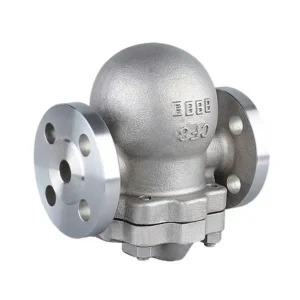
The terms “stop valve” and “shut off valve” are often used interchangeably in general conversation and basic plumbing, as they refer to any valve whose primary function is to stop or shut off the flow of fluid completely.

However, in professional and technical contexts, particularly within fluid control and engineering, one term might refer to a specific valve type or function, while the other is more generic.
1. Shut Off Valve (The General Term)
“Shut off valve” is the most common and general term used to describe any valve designed to operate in an open or closed position to isolate a section of a pipeline.
Characteristics:
Function: Isolation only (full open or full closed). They are not intended for throttling or flow regulation.
Examples: The term “shut off valve” is a category that includes many different mechanical types, such as:
Ball Valves: The most common modern shut-off valve.
Gate Valves: Traditional shut-off valve, common in old residential plumbing and large pipelines.
Plug Valves: Used for on/off service.
Isolation Diaphragm Valves: Used for corrosive media shut-off.
Usage: You would use this term to describe the main valve controlling water into your house, or a valve isolating a specific machine in a factory.
2. Stop Valve (The Specific Term/Historical Context)
Historically, and often still in Europe or specific sectors, “stop valve” is used interchangeably with “shut off valve.” However, in modern technical specifications, it often carries a more specific meaning, sometimes referring to a valve designed for both isolation and regulation:
Characteristics:
Function: While sometimes used synonymously with “shut off valve,” the term “stop valve” can specifically refer to a valve capable of:
Stopping (isolating) flow, and;
Regulating (throttling/slowing) flow.
The Globe Valve Connection: Because Globe Valves are excellent at throttling (stopping flow partially) and isolating (stopping flow completely), the term stop valve is frequently used as a synonym for Globe Valve.
Design Difference: A globe valve uses a disc that moves perpendicularly to the flow stream, creating a variable restriction—the ideal “stop” mechanism for regulation.
🛑 Summary of Comparison
| Feature | Shut Off Valve | Stop Valve |
| Generality | General Category: Any valve for ON/OFF isolation. | Specific/Historical: Often used generically, but technically may imply a throttling capability. |
| Primary Use | Full Isolation (ON/OFF). | Full Isolation AND Flow Regulation (Throttling). |
| Common Design | Ball, Gate, Plug Valves. | Globe Valves (most common technical association). |
| Modern Context | The more commonly accepted and broader term. | Often used interchangeably with Globe Valve or Shut Off Valve. |
Conclusion
In short, if you are looking for a valve to turn water completely ON or OFF, you are looking for a Shut Off Valve (most likely a ball valve or gate valve).
If someone specifies a Stop Valve, it is safe to assume they mean a valve for isolation, but if precision regulation is also required, they are very likely referring to a Globe Valve (a type of shut off valve).