The Anatomy of a Gate Valve: A Detailed Parts Diagram and Their Functions
The gate valve is the most common type of isolation valve used in industrial piping systems. Designed for fully open or fully closed service, it acts as a “gate” to allow or block fluid flow. To understand why this valve is so reliable under high pressure, one must look at the gate valve inside. In this guide, we break down the gate valve anatomy to explain the parts and function of a gate valve in detail.
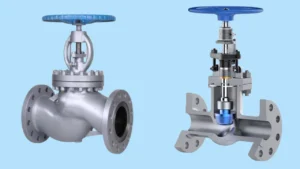
Before diving into the descriptions, it is essential to visualize the components of a gate valve. An industrial gate valve typically consists of seven primary sections.
The gate valve body is the main pressure-retaining gate valve component. It connects to the piping system via flanged, threaded, or welded ends. The body houses the internal flow path and the seating surfaces.
Gate Valve Usage Tip: Cast steel bodies are standard for oil and gas, while ductile iron is common in water works.
2. The Bonnet: The Protective Cover
The bonnet is the top part of the gate valve anatomy that joins the body through bolts or a pressure-seal design. It creates a leak-proof closure for the upper portion of the valve and allows for the removal of the gate valve inside components for maintenance.
3. The Stem: The Linkage
The stem is the rod that connects the handwheel to the wedge. It transmits the rotational motion of the operator into the linear motion of the gate.
Rising Stem: The stem moves up when the valve opens, providing a visual cue of the valve’s status.
Non-Rising Stem (NRS): The stem stays in place, making it ideal for space-constrained environments like post indicator valve (PIV) assemblies.
4. The Wedge (Gate): The Heart of the Valve
This is the most critical part of a gate valve. The wedge is the “gate” that stops the flow. Depending on the gate valve types, the wedge can be:
Solid Wedge: Best for general purpose and turbulent flow.
Flexible Wedge: Features a cut around the perimeter to help the wedge seat better despite thermal expansion or pipe stress.
Split Wedge: Two independent halves that seat perfectly on both sides.
5. The Seats: The Sealing Surface
The seats provide the surface against which the wedge seals. In a flanged gate valve, these seats are often “renewable,” meaning they can be unscrewed and replaced if they become scarred by debris.
6. Packing (Gland Seal)
Located inside the bonnet, the packing prevents the fluid from leaking out along the stem. It is usually made of graphite or PTFE. Proper maintenance of this gate valve component is essential to prevent “fugitive emissions.”
Gate Valve Function and Operation
The primary gate valve function is isolation. When the handwheel is turned, the stem moves the wedge up (to open) or down (to close) at a 90-degree angle to the flow path.
Why is it not used for throttling?
A gate valve used for throttling (partial flow) will experience severe vibration and “wire-drawing” (erosion of the seat and wedge) because the fluid slams against the partially open gate. It is strictly an “On/Off” valve.
Summary Table: Parts and Function of Gate Valve
Component
Function
Body
Main flow-through part; holds the pressure.
Bonnet
Connects to the body; protects internal parts.
Wedge (Gate)
The actual “obstruction” that stops the fluid.
Stem
Moves the wedge up and down.
Seats
Provides a tight seal for the wedge.
Packing
Prevents leaks from escaping around the stem.
Conclusion
Understanding the components of a gate valve is the first step in ensuring a long service life for your piping system. From the wedge types to the bonnet design, every part plays a role in maintaining a bubble-tight seal.