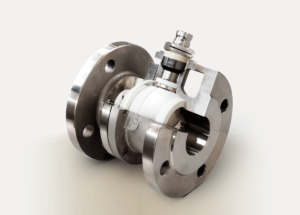
If you have a water emergency at home and your indoor shut-off valve fails, there is only one thing standing between you and a flooded basement: the curb stop valve.
Often hidden under a small metal cap in your yard or sidewalk, the curb stop is the most critical link in your home’s infrastructure. In this guide, we’ll explain what it does, who is responsible for it, and the tools you need to operate it.
1. What is a Curb Stop Valve?
A curb stop valve (also known as a curb valve) is an underground water shut-off valve that connects the municipal water main to your individual property’s water line.
Its primary purpose is to allow the water utility company (or a plumber) to turn off water to a specific building without affecting the rest of the neighborhood. It is typically located at the “property line”—the boundary where city land ends and your land begins.
2. Specification Focus: The 1″ Curb Stop
While industrial lines use larger diameters, the 1″ curb stop is the gold standard for modern North American residential construction.
Why 1 inch? A 1″ curb stop valve provides the ideal balance of water pressure and volume (GPM) for a standard single-family home, even those with multi-zone irrigation systems.
Materials: High-quality curb stops are typically made of heavy-duty forged brass to resist soil corrosion and withstand decades of being buried underground.
3. How to Operate It: The Curb Stop Key
Because the valve is buried several feet below the frost line, you cannot reach it by hand. This is where the curb stop key comes into play.
The Tool: A curb stop key is a long, T-shaped steel rod with a notched end that fits over the valve’s “tee” head.
The Operation: You insert the key through the curb box (the vertical pipe leading to the valve) and turn it 90 degrees to shut off the water.
Pro Tip: Never force a curb stop valve. If it’s stuck, it likely has accumulated debris or mineral deposits. Forcing it can snap the valve head, leading to an expensive excavation.

4. Responsibility: Who Pays for the Repair?
One of the most searched questions is: “My curb stop water valve is leaking; is it my problem or the city’s?”
The answer usually depends on where the leak is located:
The City’s Responsibility: Generally, the city owns the water main and the curb stop valve itself. If the valve fails or the connection to the city main leaks, the municipality usually handles the repair.
The Homeowner’s Responsibility: You are typically responsible for the pipe leading from the curb stop into your house.
Note: Rules vary by city. Always call your local water department before attempting a DIY repair on a curb stop.
5. Common Problems with Underground Water Valves
Seized Valves: Due to lack of use, these valves can become frozen in the “open” position.
Debris in the Curb Box: Dirt and rocks can fall into the standpipe, preventing the curb stop key from seating correctly.
Corrosion: Older galvanized iron pipes connected to the brass valve can corrode, causing “pinhole” leaks at the junction.
6. Buying Guide: Choosing a Reliable Curb Stop
If you are a contractor or developer looking for curb stop valves for sale, look for these three features:
Full Port Design: Ensures no restriction in water flow.
Blow-out Proof Stem: A critical safety feature for high-pressure municipal lines.
Lead-Free Brass: Ensures compliance with potable water safety standards (NSF/ANSI 61).