Modern kitchens and labs often require more than just a single cold-water outlet. Whether you are adding a high-end filtration system, a dedicated dishwasher line, or a point-of-use water heater, a tee stop valve is the most efficient way to expand your plumbing without a major renovation.
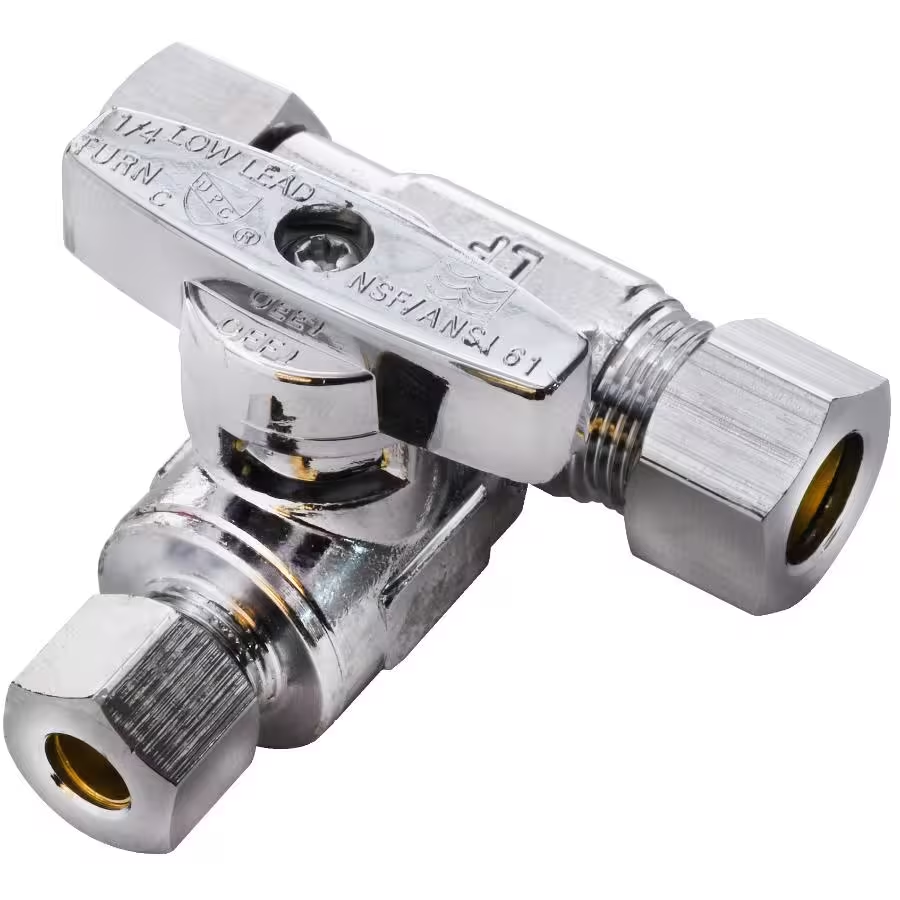
A 3/8 water line splitter with shut off valve allows you to branch off your main supply line while maintaining independent control over each outlet. In this guide, we’ll explore the different configurations of plumbing t valves and how to choose the right one for your installation.
1. Under-Sink Branching Logic
The most common application for a tee valve with shut off is under the kitchen sink. Most US and European faucets use a 3/8″ compression connection.
To add a new appliance, you simply install a 3/8 splitter valve between the existing shut-off valve at the wall and the faucet riser. This creates a “secondary” outlet. This is ideal for:
Reverse Osmosis (RO) Systems
Under-Counter Water Chillers
Secondary Dishwashers
2. Tee Valve with Shut Off vs. Standard Tees
Why should you choose a tee stop valve over a basic metal T-fitting?
Independent Isolation: A tee valve with shut off allows you to turn off the water to your dishwasher or filter for maintenance without losing water to your main kitchen faucet.
Safety: If a leak develops in an auxiliary appliance, you can shut it off at the source instantly.
Flow Regulation: Some plumbing t valves allow you to throttle the flow to sensitive filtration systems that require specific pressure inputs.
3. Technology & Connection Types: Choosing Your Style
In the world of tee stop valves, two names dominate the professional and DIY markets for their ease of use:
A. SharkBite T Valve Style (Push-to-Connect)
For those working with copper, PEX, or CPVC who want a “no-tool” installation, a SharkBite t valve style connector is the gold standard. You simply push the pipe into the fitting for an instant, permanent, and code-compliant seal.
B. John Guest Shut Off Valve (Quick-Connect)
For 1/4″ or 3/8″ plastic tubing used in filtration, the John Guest shut-off valve mechanism is world-renowned. It utilizes a “collet and O-ring” system that allows for tool-free assembly and disassembly—perfect for systems where filters need to be swapped frequently.
4. Technical Specs: The 3/8 Compression Standard
When specifying your plumbing t valve, ensure you are matching the thread types correctly. Most residential “stop valves” in the US utilize:
Inlet: 3/8″ Female Compression (Screws onto the wall valve).
Outlet 1: 3/8″ Male Compression (Connects back to the faucet).
Outlet 2 (The Branch): 1/4″ OD or 3/8″ OD (Depending on your appliance).
5. Professional Installation Tips
To ensure your 3/8 water line splitter remains leak-free for decades:
Don’t Over-Tighten: Compression fittings require a “snug plus a quarter-turn.” Over-tightening can crush the brass ferrule and cause a slow drip.
Deburr the Pipe: If using a push-fit SharkBite t valve, ensure the end of the pipe is smooth and free of burrs to protect the O-ring.
Check for “Water Hammer”: If your new branch line (like a dishwasher) uses a solenoid valve, ensure the lines are secured with clamps to prevent the “banging” noise of water hammer.
Conclusion
A tee stop valve is a small investment that offers massive flexibility for your plumbing system. By opting for a tee valve with shut off, you gain professional-level control over every appliance in your kitchen or utility room.